

Table of content
If your dentist in Australia has recommended a crown, or several, the quote can be a surprise. Crowns are priced per tooth, and the total grows quickly when more than one tooth is involved. Many Australians therefore ask whether having crowns done in Vietnam is worth the trip, and what happens if a problem appears after they are back home.
This guide compares dental crowns in Australia and Vietnam on three points: how the cost is built up, how many trips you are likely to need, and what aftercare looks like once you are home. It uses Elite Dental Vietnam’s 2026 price list and published Australian cost guides.
Key Takeaways
Crowns are priced per tooth, so the saving grows with the number of crowns. Published Australian guides commonly place a porcelain or zirconia crown at about A$1,500 to A$2,500 per tooth. At Elite Dental Vietnam, a full zirconia crown costs 8,000,000 to 9,000,000 VND per tooth (about A$450 to A$500).
The crown fee is not the whole cost. A tooth may need a root canal, a post and core build-up or gum reshaping before the crown can be placed. Ask for these items to be listed in the quote.
Crowns can usually be completed in a single stay. Elite Dental typically completes crowns and veneers within one 5 to 10 day stay, which is confirmed in your treatment plan. In Australia, a crown usually takes two appointments with a temporary crown in between.
Aftercare depends on documentation. Before you fly home, ask for a written record of the teeth treated, the material used, your X-rays and the warranty terms, so that a dentist in Australia can assess your crowns if needed.
1. When Is a Crown the Right Option?
A dental crown is a cap that covers a tooth that is badly worn, cracked, heavily filled or weakened after root canal treatment. It restores the tooth’s shape, strength and appearance.
Crowns differ from veneers. A veneer is a thin ceramic shell, about 0.3 to 0.5 mm thick, bonded to the front of a tooth that is otherwise sound. A crown covers the whole tooth and is used when more protection is needed. Teeth that have had root canal treatment generally cannot be treated with veneers, and a crown is used instead. At the back of the mouth, where chewing forces are higher, full-ceramic zirconia crowns are often used. For a closer look at the two treatments, see our guide to Dental Veneers: Advantages, Procedure, Cost & Outcome.
Whether a crown is the right choice for a particular tooth is decided after examination and X-rays.
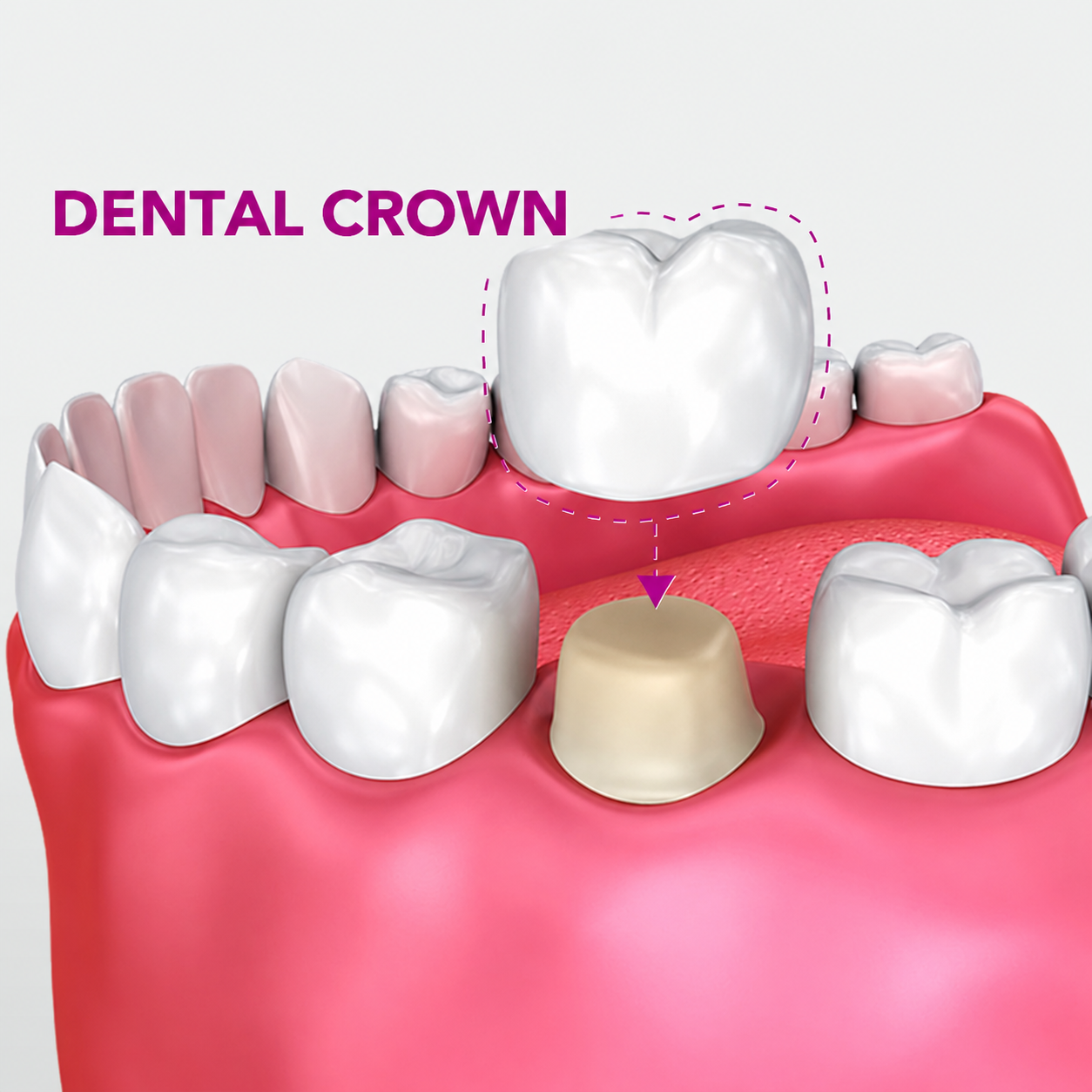
Dental crowns – the most traditional and widely used restorative dental treatment today
2. Cost Structure: Australia vs Vietnam
What you pay for in Australia
Published Australian cost guides for 2026 commonly place a porcelain or zirconia crown at about A$1,500 to A$2,500 per tooth. Wider ranges, from A$1,200 up to A$3,200, also appear, depending on the city, the material, the laboratory and whether a general dentist or a specialist prosthodontist places the crown. The fee usually includes the laboratory cost.
Many Australian clinics also offer same-day crowns milled on site (CEREC), and some give a lower per-unit fee when several crowns are done together. If you have private health insurance, check the annual limit for major dental work and whether treatment overseas can be claimed.
What you pay for at Elite Dental Vietnam
The table below is based on Elite Dental’s 2026 price list. Each item is charged separately, so you can see which parts of the plan apply to your tooth.
| Item | VND | ≈ US$ | ≈ A$ |
|---|---|---|---|
| Examination (refunded when you proceed with treatment) | 500,000 | 20 | 30 |
| 3D CBCT scan, both jaws (refunded when you proceed with treatment) | 700,000 | 30 | 40 |
| Full zirconia crown, per tooth | 8,000,000 to 9,000,000 | 310 to 350 | 450 to 500 |
| Root canal treatment, if needed (front tooth, premolar, molar) | 3,500,000 / 4,000,000 / 5,000,000 | 135 / 155 / 200 | 195 / 225 / 280 |
| Fibre post and core build-up, if needed | 1,000,000 | 40 | 55 |
| Crown lengthening, if needed (per tooth, with or without bone reshaping) | 1,000,000 to 2,000,000 | 40 to 80 | 55 to 115 |
Prices are indicative. Reference exchange rates: US$1 ≈ 26,000 VND and A$1 ≈ 18,000 VND. Your quote is confirmed after examination and explained before you decide.
The crown is the main cost. Root canal treatment, a post and core build-up and crown lengthening apply only to teeth that need them, so ask your dentist which of these are likely in your case.
Does the saving hold up?
The table compares treatment fees only, for full zirconia crowns in Vietnam and porcelain or zirconia crowns in Australia.
| Number of crowns | Elite Dental Vietnam | Australia (published guides) |
|---|---|---|
| 1 crown | About A$450 to A$500 | About A$1,500 to A$2,500 |
| 4 crowns | About A$1,800 to A$2,000 | About A$6,000 to A$10,000 |
| 8 crowns | About A$3,600 to A$4,000 | About A$12,000 to A$20,000 |
To compare fairly, add one return flight and accommodation for your stay to the Vietnam total, then compare it with your own Australian quote for the same teeth and the same material. For a single crown, travel costs can outweigh the saving. For several crowns, the gap usually remains substantial even after travel is included.
3. How Crown Treatment Works
At Elite Dental, getting a crown follows four steps:
1. General examination. The dentist checks the overall health of your teeth and gums. Problems such as tooth decay, gum disease or an inflamed or damaged pulp need to be treated first, and the crown is placed afterwards. Based on your teeth, the dentist recommends a treatment plan and the type of crown that suits you.

Your dentist will craft a personalized treatment plan and recommend the ideal crown to complement your smile
2. Preparing the tooth. Before the tooth is reshaped, the dentist cleans your mouth thoroughly and gives local anaesthesia, so the procedure is comfortable. The amount of tooth that needs to be removed differs from person to person, so this step relies on an experienced dentist who prepares the tooth in the right proportions. A tooth that is prepared too thin or too thick affects the quality of the crown and can damage the natural tooth.
3. Digital impression. Instead of traditional impression material, which can be uncomfortable and may cause gagging, Elite Dental uses a digital scanner as part of its CAD/CAM workflow. The scan is accurate, and the experience is gentler for the patient. The crown is then made from this digital model.
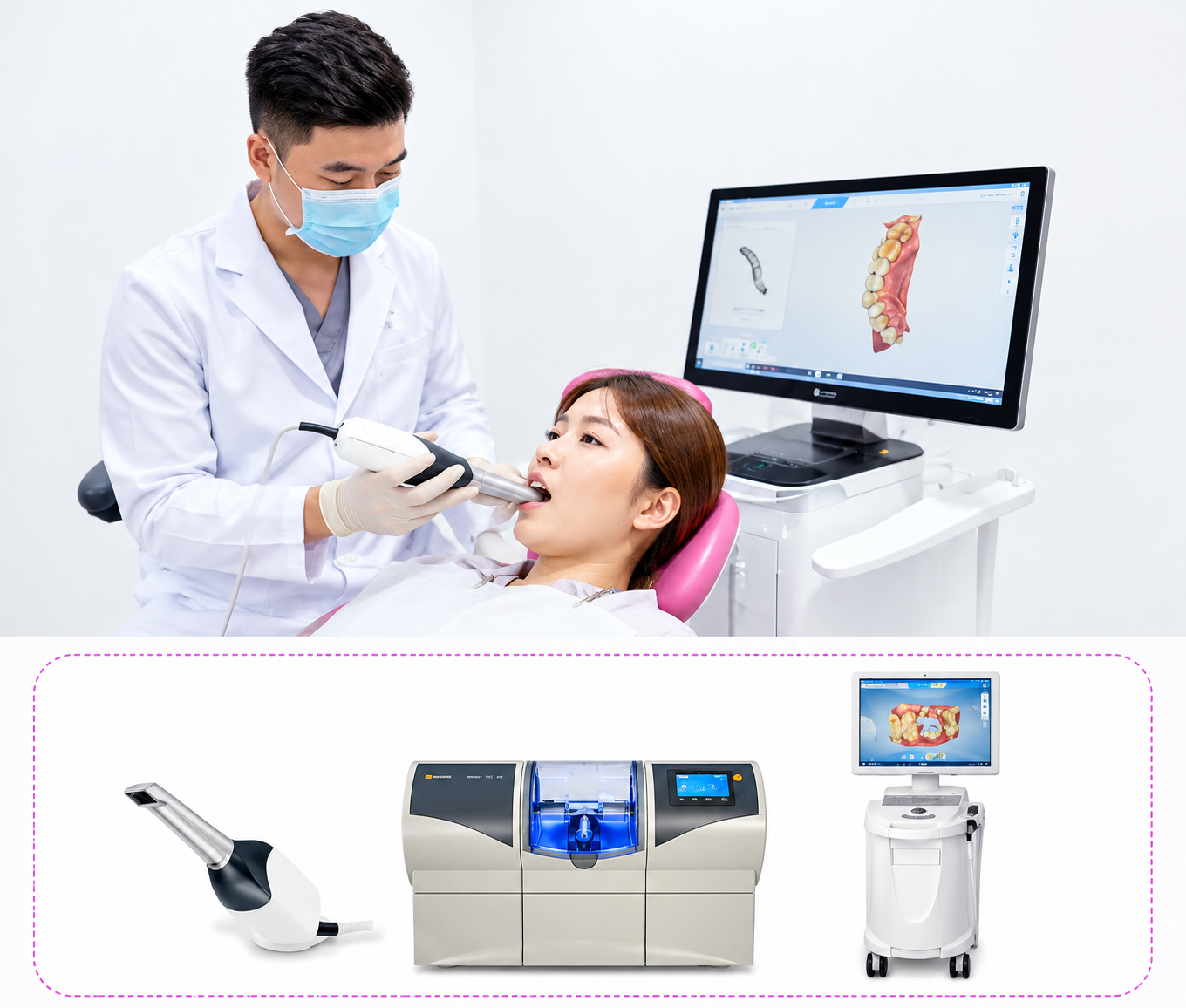
At Elite Dental, advanced digital scanning seamlessly integrates with CAD/CAM technology to deliver precision-crafted restorations tailored to every smile
4. Fitting the crown. The dentist places the crown over the prepared tooth and fixes it in place with a dental adhesive. A good result needs both a natural appearance and a correct bite, so the dentist checks the fit and how your teeth come together before finishing.
A damaged tooth that has lost its pulp may need root canal treatment, a post and core build-up or gum reshaping before the crown, as described in Section 2.
4. Trips Needed
In Australia, a crown usually takes two appointments: one to prepare the tooth and fit a temporary crown, and a second to fit the final crown. Published guides describe a wait of about one to two weeks between the two, and some clinics offer same-day crowns instead.
At Elite Dental Vietnam, crowns and veneers can usually be completed in a single 5 to 10 day stay. In a case treated at Elite Dental, a patient received 9 veneers and 10 full-ceramic zirconia crowns, 19 units in total, in three appointments:
- Appointment 1: examination, X-rays, Cone Beam CT and a 3D digital scan, followed by treatment planning and the choice of shade and shape.
- Appointment 2: the teeth are prepared and temporary teeth are fitted so the patient can check how they look and feel.
- Appointment 3: the final restorations are fitted and the dentist checks the bite, the fit at the gum line and how comfortable chewing feels.
Results and timing vary from person to person. If a tooth needs root canal treatment, a build-up or gum treatment first, the plan may take longer. The expected number of appointments is confirmed before treatment begins.
5. Aftercare at Home
A crown does not need special equipment at home, but the first weeks and the long term both matter.
Daily care.
- Brush twice a day with a soft toothbrush, including along the gum line around each crown.
- Clean between the teeth every day with floss or a water flosser to remove food from around the crowns.
- Attend regular check-ups, so the dentist can check the fit of the crowns, the bite and the gums.
Protect the crown.
- Avoid biting hard or sticky foods on the new crown, and do not use your teeth to open bottles or packaging.
- If you clench or grind your teeth, ask your dentist whether a night guard is advised.
- Avoid smoking, which affects gum health and can discolour teeth.
When to contact a dentist. See a dentist promptly if a crown feels high or the bite feels uneven, if a crown becomes loose or comes off, if sensitivity or pain continues, or if the gum around a crown is swollen or bleeding. If a crown comes off, keep it safe and take it with you to the appointment.
Documents to bring home. A dentist in Australia can assess your crowns more easily if you have:
- A written record of which teeth were treated and the material used for each.
- Copies of your X-rays and CBCT scan, and photographs of the finished work.
- The warranty terms and aftercare instructions in writing.
- A named contact at the clinic, and how follow-up is carried out remotely.
6. What to Check Before You Book
Use this checklist with any clinic, in any country:
- The treating dentist. Ask for the dentist’s name, training and experience with crowns.
- The material. Ask for the crown material by name (for example full zirconia) and where it is made.
- What the quote includes. Check whether it covers the examination, imaging, root canal treatment, post and core, temporary teeth, the crowns themselves and review appointments.
- How much of the tooth is preserved. Ask how much tooth structure will be removed and why.
- The final check before you fly. Confirm that the stay includes a review of your bite after the crowns are fitted.
- Written warranty and aftercare. Ask for the terms in writing and for the process if a crown needs attention after you return home.
- Accreditation. Ask for a copy of the certificate, and check the issuing body, the score, the year and whether it covers the branch where you will be treated.
7. Crowns at Elite Dental Vietnam
Elite Dental is an international premium dental system in Ho Chi Minh City, with three branches (Huynh Tinh Cua, Tu Xuong and Metropole) – the first dental clinic in Vietnam to receive AACI (American Accreditation Commission International) accreditation, with a score of 95.33/100.
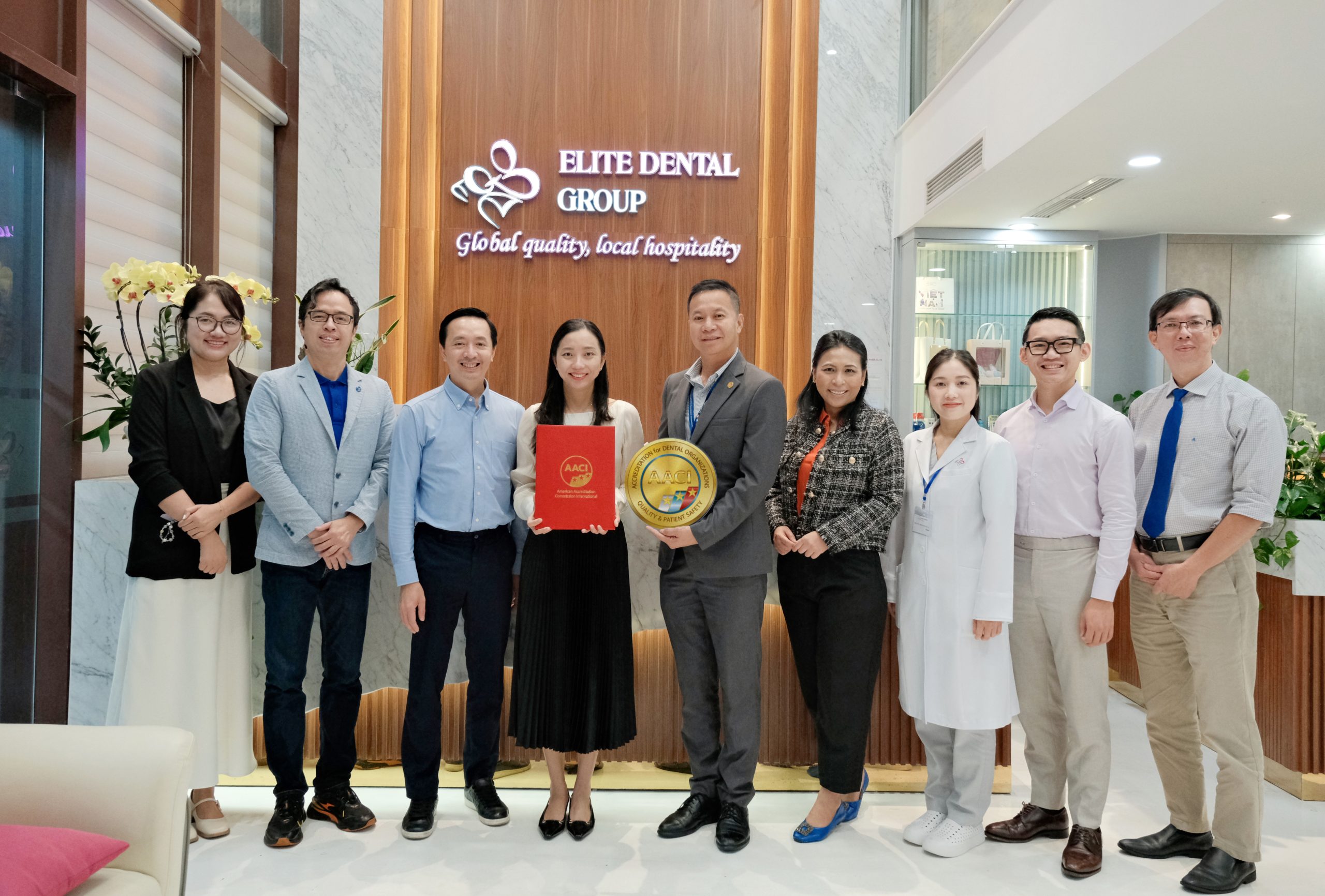
As the country’s first dental clinic to achieve AACI (American Accreditation Commission International) accreditation, with an outstanding score of 95.33/100, we set a new benchmark for excellence in dentistry.
Minimal intervention, maximum preservation. Elite Dental follows this philosophy together with evidence-based dentistry. Each option is built on the data and condition of the individual patient, using 3D imaging and digital planning, with the aim of keeping as much natural tooth structure as possible. The name and professional background of your treating dentist are provided in writing before you travel, and every treatment plan is itemised and agreed in writing before you depart.
For crowns, Elite Dental uses full zirconia, a high-strength ceramic. To see how porcelain and zirconia differ and how digital restorations are made, read Porcelain vs Zirconia and the Digital Restoration Process.
The team includes more than 30 specialists trained in France, Italy, the US and Japan, and English-speaking staff support patients travelling from overseas.
For a personalised crown plan, call (+84) 28 7306 3838 or send us your most recent X-ray through our contact form.
Frequently Asked Questions
How much does a dental crown cost in Vietnam compared with Australia? At Elite Dental Vietnam, a full zirconia crown costs 8,000,000 to 9,000,000 VND per tooth (about A$450 to A$500). Published Australian guides commonly place a porcelain or zirconia crown at about A$1,500 to A$2,500 per tooth. Additional treatment such as a root canal is charged separately if your tooth needs it.
How many trips do I need for a dental crown? Crowns can usually be completed in a single stay of about 5 to 10 days at Elite Dental. The exact schedule depends on your teeth and is confirmed in your treatment plan.
What is the difference between a crown and a veneer? A veneer is a thin shell bonded to the front of a tooth. A crown covers the whole tooth and is used when a tooth needs more protection, for example after root canal treatment.
What material are crowns made from at Elite Dental? Elite Dental uses full zirconia crowns. Zirconia is a tooth-coloured ceramic known for its high strength.
What if a crown comes loose after I return home? See a dentist promptly and keep the crown safe. A dentist in Australia can assess the tooth and the crown. Bring your treatment records and X-rays, and contact the clinic that treated you to discuss follow-up.
Can I get advice before I travel? Yes. You can send your most recent X-ray for a preliminary assessment. The final plan is confirmed after an examination in person.
References
- Elite Dental Vietnam. 2026 price list. https://elitedental.com.vn/en/pricelist
- Smile Solutions. How much do dental crowns cost in Melbourne? 2026 pricing guide. https://directory.smilesolutions.com.au/ai-search-cost-value-guides/treatment-pricing-melbourne-2026/how-much-do-dental-crowns-cost-in-melbourne/
- Independent Australian cost guides (ADA fee survey and published clinic price lists), 2026. https://whatsthedamage.com.au/dentist-cost-sunshine-coast/
- American Accreditation Commission International (AACI). Accreditation Standards for Dental Facilities, Version 2.1.
Please note: This article is intended for general information only and is not a substitute for professional medical advice. Every patient’s oral health is different, so the most suitable treatment can only be determined after an in-person consultation and a personalized assessment by a qualified dentist.