

Table of content
- Key Takeaways
- 1. Why Australians Look Overseas for Dental Care
- 2. The Three Destinations at a Glance
- 3. What Matters More Than the Country
- 4. Which Treatments Suit a Trip Abroad?
- 5. Compare the Total Cost, Not the Sticker Price
- 6. Questions to Ask Any Clinic, in Any Country
- 7. Where Vietnam Fits, and Where It May Not
- Frequently Asked Questions
- References
If you have been quoted thousands of dollars for implants, crowns or veneers in Australia, it is natural to look at Vietnam, Thailand and Bali. All three are popular with Australians, all three are a flight away, and all three advertise large savings. But a country is not a quality rating. The better question is whether a particular treatment, at a particular clinic, suits a trip abroad.
This guide compares the three destinations fairly, explains where each one tends to fit and where it may not, and sets out what to check before you book. It is written by Elite Dental Vietnam, so we say plainly where our own view comes from, and we point out the limits of any comparison, including ours.
Key Takeaways
No destination is automatically better. Quality varies from clinic to clinic and from dentist to dentist, in every country, including Australia. What matters is whether your treatment is properly diagnosed, planned and followed up.
The scale of the treatment matters more than the country. A clean or a simple filling on a holiday you have already booked carries little risk. Implants, several crowns and full smile makeovers need more planning, healing time and follow-up.
Compare the total cost, not the advertised price. Flights, accommodation, time off work, repeat trips and the chance of paying Australian prices to correct a problem all belong in the comparison.
Check what happens after you fly home. Written records, X-rays, implant details and a named contact are what make follow-up possible in Australia.
1. Why Australians Look Overseas for Dental Care
Most adult dental care in Australia sits outside Medicare, and private health insurance usually covers only part of a large bill. Government figures reported in 2026 show that 28% of Australians aged 15 and over who needed dental care in 2023–24 delayed or skipped a visit, and 18% of them cited cost. Add frequent flights to South-East Asia and the chance to combine treatment with a holiday or a family visit, and the appeal is easy to understand.
The procedures most often marketed to Australians are implants, crowns, veneers and full smile makeovers. These are also the treatments where the quality of planning and follow-up matters most.
2. The Three Destinations at a Glance
| Vietnam | Thailand | Bali (Indonesia) | |
| Flight from Australia | Longer flight; check current direct routes from your city | Longer flight; check current direct routes from your city | Generally the shortest flight from most Australian cities |
| Profile | Known for low prices; some patients combine treatment with a family visit | Long-established medical tourism industry, with large dental hospitals geared to international patients | Strong holiday appeal; Indonesia is among the countries most Australian dental patients travel to |
| Indicative price, single implant with abutment and crown | About A$1,200 to A$2,000 | About A$1,500 to A$2,500 | No reliable like-for-like figure in published sources; ask for an itemised quote |
| What to verify | Dentist’s registration, accreditation, implant brand, written warranty | Same | Same |
Price indications are from a UTS health economics researcher quoted by Money magazine in 2026. She cautions that most published figures come from medical tourism businesses and are list prices, not like-for-like comparisons. They are market indications, not Elite Dental’s quotes. Our own prices are set out in our guides to implants, crowns and veneers.
On paper, Thailand has the longest track record with international patients and Bali has the shortest journey. Vietnam typically competes on price and, increasingly, on clinics that apply international accreditation standards. None of this tells you whether a specific clinic is right for your teeth.
3. What Matters More Than the Country
Australian dentists who see patients after overseas treatment make a consistent point: the problems rarely come from the country itself. They come from how the treatment was done and what happened afterwards.
Speed. Complex work is often compressed into a few days because of a booked return flight. Implants need months to integrate with the bone, and crowns, veneers and full-arch restorations may need bite adjustments after the mouth settles.
Follow-up. A small bite adjustment or an early sign of inflammation is simple to deal with when your dentist is nearby. From Australia, it can mean another flight or a new dentist taking over an unfamiliar case.
Records. If a dentist in Australia has no treatment notes, X-rays or details of the implant system, repairing the work safely can be difficult.
Scope. The Australian Dental Association has said that complex procedures should not be done over the course of a holiday. Many dentists draw a line between basic care and major work such as implants, multiple crowns or full-mouth treatment.
There are also no strong population studies showing that overseas dentistry is poorer overall. The larger issue is accountability when something goes wrong.
4. Which Treatments Suit a Trip Abroad?
| Treatment | What to consider |
| Check-up, clean, simple filling | Low risk, especially on a trip you have already planned |
| Veneers and crowns | Can usually be completed within one stay, but need a bite check before you fly home and written warranty terms |
| Single implant | Needs healing time, typically about 6 to 14 weeks from placement to the finished crown at Elite Dental, and usually two trips |
| Full-arch implants (All-on-4, All-on-6) | Two trips with several months of healing at home, careful planning and long-term maintenance |
For complex treatment, a more cautious approach is reasonable: start with a remote review of your X-rays, ask for a written plan and decide only after you have compared the total cost and follow-up arrangements.
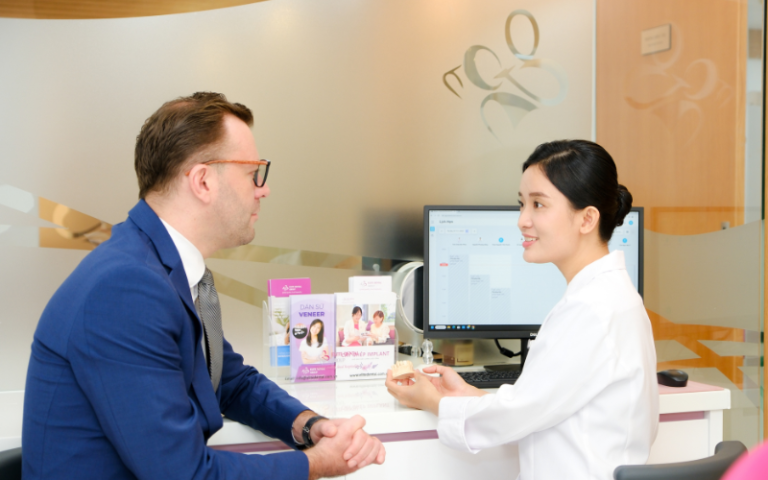
Reviewing X-rays and scans before travel helps patients compare options with confidence
5. Compare the Total Cost, Not the Sticker Price
Advertised savings of 70% or more are common, but they usually compare list prices rather than like-for-like care. The final bill depends on the diagnosis, the implant brand, the materials, the laboratory, specialist input and whether bone grafting, extractions or other treatment is needed.
A fair comparison includes:
- The treatment itself, itemised.
- Flights and accommodation for every trip you will need.
- Time off work.
- Repeat visits, if the plan needs more than one trip.
- The cost of follow-up and maintenance at home.
- The possibility of paying Australian prices to correct a problem.
Insurance. Standard travel insurance is built for unexpected events, not a procedure planned before departure. Most policies exclude complications linked to elective dental work that is the purpose of the trip, so an infection resulting from planned treatment may not be covered. Specialist medical tourism insurance exists. Medicare does not cover care overseas, and the Australian Government does not pay overseas medical bills or evacuation costs. Tell your private health insurer about your plans and read the policy terms carefully.
Agencies. Dental concierge services can help with shortlisting clinics, quotes, bookings and transfers. They are not a substitute for your own checks. Ask how the agency is paid, whether it receives referral fees and what help it provides if complications arise at home.
6. Questions to Ask Any Clinic, in Any Country
Use this checklist for Vietnam, Thailand, Bali or anywhere else:
- Verify the dentist’s registration through the destination’s official regulator, not only through the clinic’s website or social media.
- Who does the work. Ask for the name, training and experience of the dentist who will treat you.
- Ask for a copy of the certificate, and check the issuing body, the score, the year and whether it covers the branch where you will be treated.
- Materials and implants. Ask for the implant brand, the crown or veneer material and where they are made.
- The plan in writing. Ask for an itemised treatment plan and quote before you travel, and ask what could change it.
- Ask what applies if treatment fails, and who covers the cost of return travel.
- Follow-up. Ask how complications and check-ups are managed once you are home.
- Ask for your treatment notes, consent forms, X-rays, scans, laboratory information and implant details before you leave.

Healing takes time, so complex treatment rarely fits into a short holiday.
7. Where Vietnam Fits, and Where It May Not
Vietnam can be a practical option for planned, well-documented dental treatment, particularly when multiple teeth need treatment and the potential savings outweigh travel expenses. However, we understand that travelling abroad for dental care may not be suitable for everyone. If your treatment requires multiple visits, you cannot travel twice for staged procedures, need urgent care, or have not had your diagnosis and X-rays reviewed, we recommend addressing these factors before making a decision.
At Elite Dental Vietnam, we are an international premium dental system based in Ho Chi Minh City, with three branches across the city. We are proud to be the first dental clinic in Vietnam to receive accreditation from AACI (American Accreditation Commission International), achieving a score of 95.33/100. Guided by our philosophy of “Minimal Intervention, Maximum Preservation,” we focus on preserving natural tooth structure while delivering personalized, high-quality dental care. Our team includes more than 30 specialists trained in France, Italy, the United States, and Japan. Before you travel, we provide the name and professional background of your treating dentist, along with a detailed, itemized treatment plan, so you can make an informed decision with confidence.
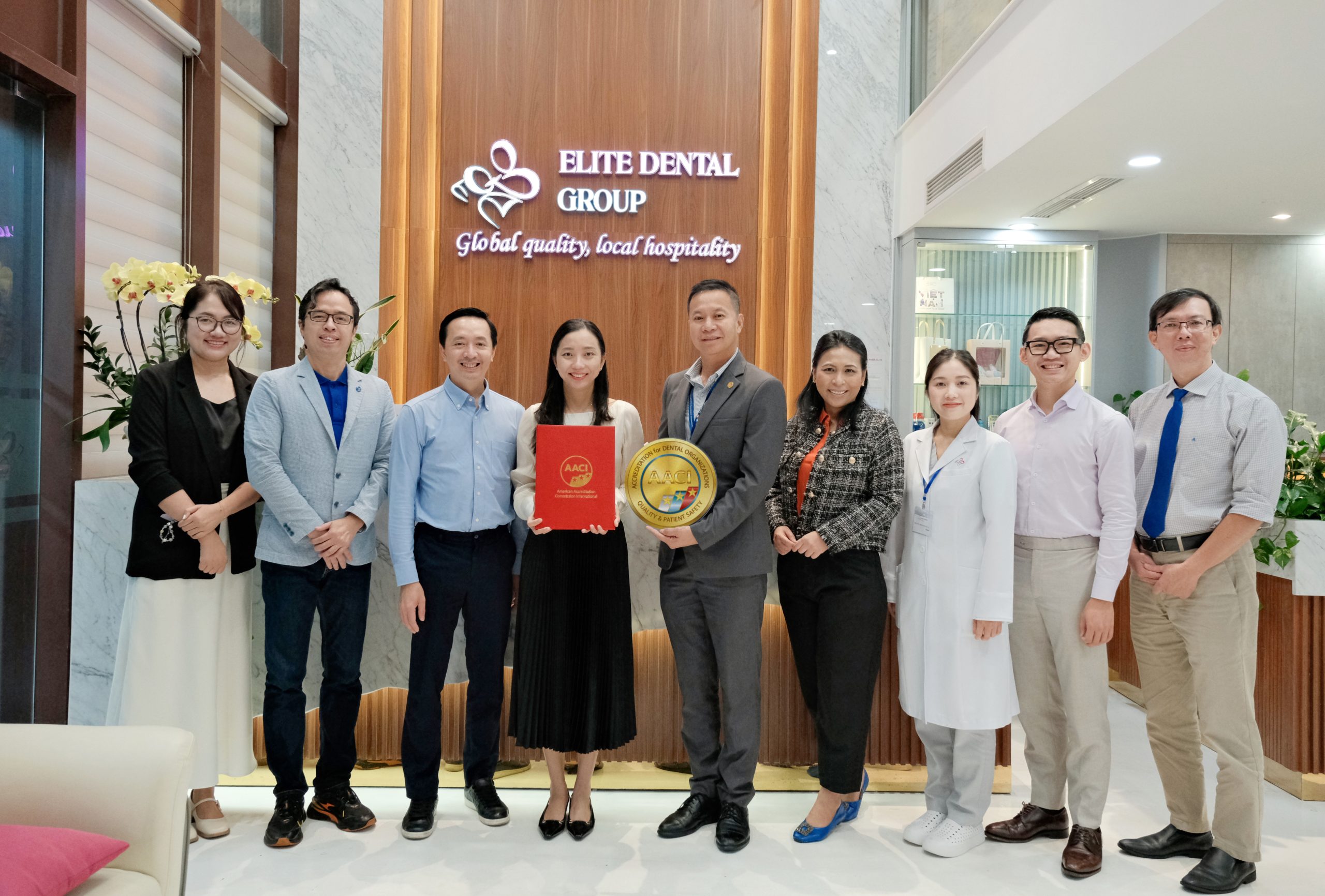
AACI accreditation: Elite Dental scored 95.33/100 under Version 2.1
We do not believe that Elite Dental is the right choice for every patient, nor do we claim that Vietnam is always a better option than Thailand or Bali. Instead, we encourage you to evaluate every clinic you consider, including ours, using the same checklist: clinical expertise, treatment transparency, technology, accreditation, aftercare arrangements, and long-term value.
For more information, explore our guides to All-on-4 Dental Implants: Australia vs Vietnam and Dental Veneers: Advantages, Procedure, Cost & Outcome.
To discuss your individual case with our team, send us your most recent X-ray or CBCT scan through our contact form, or call us at (+84) 28 7306 3838. We will help you understand your options and determine the next steps based on your dental needs.
Frequently Asked Questions
Is Vietnam, Thailand or Bali the best country for dental work? None is best in every case. Quality depends on the clinic, the dentist and how well the treatment is planned and followed up. Compare each option on registration, accreditation, materials, written warranty and follow-up arrangements.
Is dental work overseas cheaper once I include travel? Often, but not always. For a single crown, travel costs can outweigh the saving. For several crowns, implants or full-arch treatment, the gap can remain substantial. Compare the total expected cost, including repeat trips and the risk of correction.
Does travel insurance cover dental complications? Standard policies usually exclude complications from elective dental work that is the reason for the trip. Specialist medical tourism cover exists. Read the policy terms and speak to your insurer before you go.
Can I get advice before I travel? Yes. You can send your most recent X-ray or CBCT to Elite Dental for a preliminary assessment. The final plan is confirmed after an examination in person.
Should I have complex treatment during a holiday? Complex work needs diagnosis, staging, healing time and follow-up. If you choose treatment abroad, plan the trip around the treatment rather than the other way around, and agree the aftercare plan before you travel.
References
- Madden G. Dental tourism: Is cheap overseas treatment worth the risk? Money magazine, 5 August 2026. https://www.moneymag.com.au/dental-tourism-overseas-costs-risks
- Australian Dental Association. Risks of dental tourism highlighted by ADA. Dental Tribune. https://www.dental-tribune.com/news/risks-of-dental-tourism-highlighted-by-ada/
- Smile Solutions. The truth about dental tourism. https://directory.smilesolutions.com.au/dental-health-specialist-care/why-choose-a-dental-specialist-smile-solutions-collins-street-specialist-centre/should-i-get-my-teeth-done-overseas-the-truth-about-dental-tourism/
- American Accreditation Commission International (AACI). Accreditation Standards for Dental Facilities, Version 2.1.
Please note: This article is intended for general information only and is not a substitute for professional medical advice. Every patient’s oral health is different, so the most suitable treatment can only be determined after an in-person consultation and a personalized assessment by a qualified dentist.