

Table of content
- Contents
- 1. Before You Leave Vietnam: The Records to Take Home
- 2. Flying Home
- 3. The First Days at Home
- 4. The Months Between Two Trips
- 5. Looking After Implants, Crowns and Bridges Long Term
- 6. Working With Your Own Dentist
- 7. If Something Needs Attention: A Step-by-Step Plan
- 8. Warranty and Documentation
- 9. Insurance and Paperwork After You Return
- 10. Staying Connected: Reviews and Returning
- Frequently Asked Questions
- Next Steps
- References
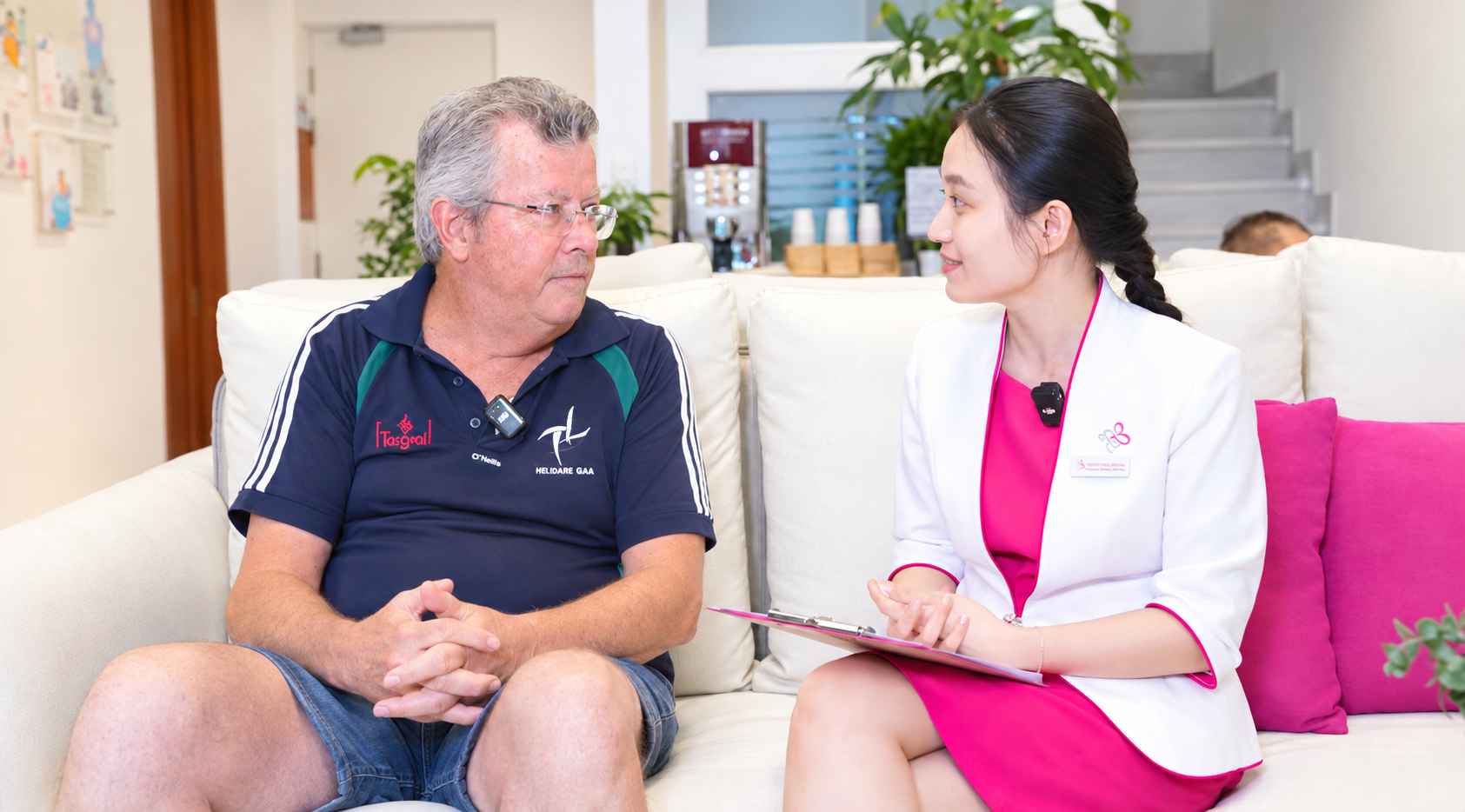
Your records travel home with you
The flight home is not the end of your treatment. It is the moment the story changes setting: from the clinic to your own kitchen, your own bathroom, your own dentist’s chair. Many people board that flight carrying two feelings at once. There is relief that the procedures are finished, and there is a quiet, practical worry about what happens if something feels off on a Tuesday night, thousands of miles from the people who treated you. That worry is perfectly reasonable. The best answer to it is a plan, and the best time to make that plan is before you leave.
At Elite Dental, that plan is built around one idea: aftercare, wherever you are. Backed by our AACI-accredited safety standards, from the moment your treatment ends, you receive:
- Full clinical documentation for your home dentist
- Remote WhatsApp follow-up with your specialist
- Manufacturer warranty on implants and restorations
- Home-dentist continuity of care
- Priority scheduling if you return for a review visit
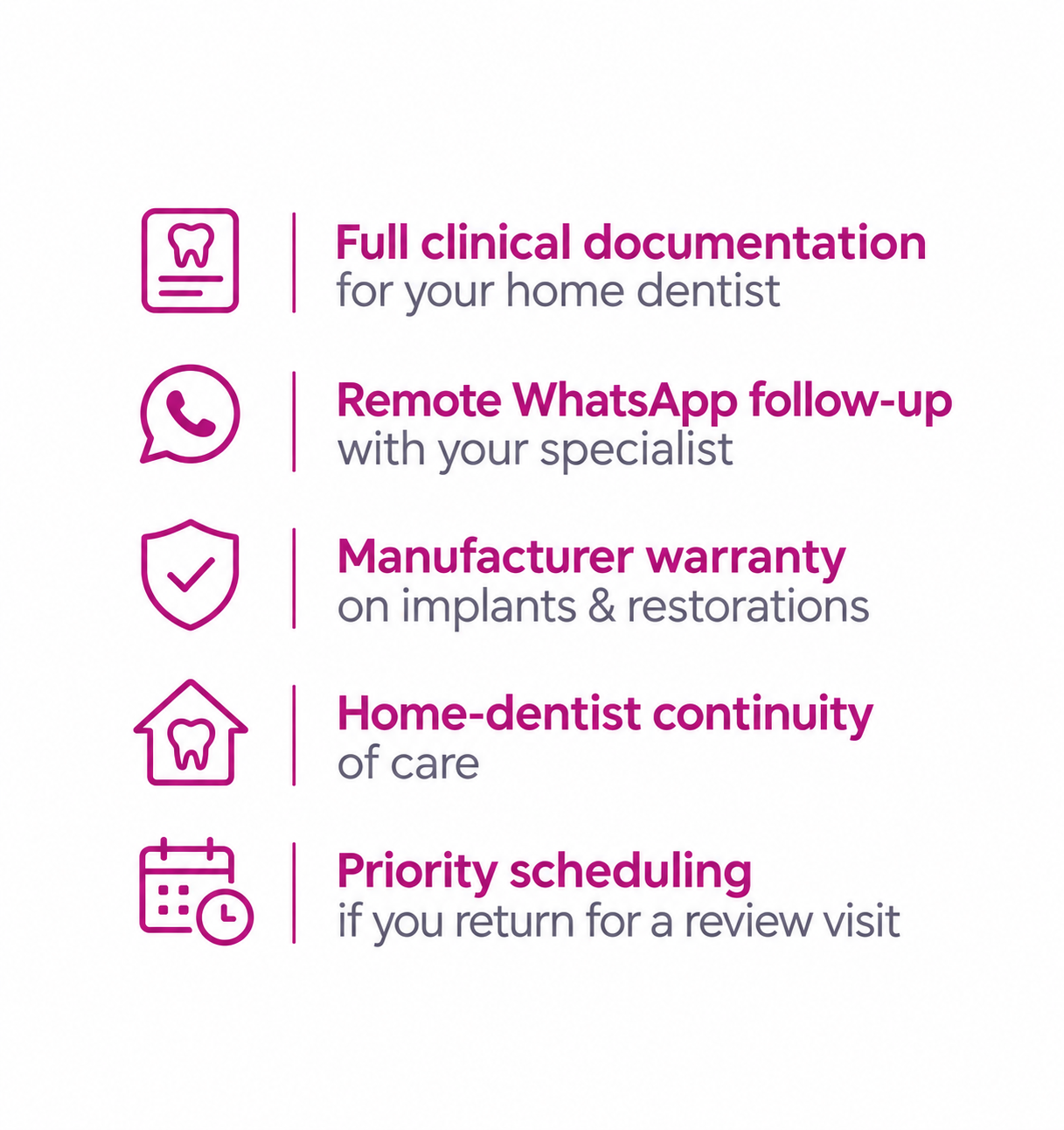
Backed by AACI-accredited safety standards, aftercare starts the moment your treatment ends. Five commitments, wherever you are
Three habits protect your result after any dental work in Vietnam: following your aftercare instructions, bringing home complete records, and keeping the lines of communication open with both your clinic and your own dentist. This guide moves through the five commitments above in the order you will actually need them. It starts with the records to gather before you leave, then covers the flight, the first days and months at home, the long-term care of your restorations, the partnership with your own dentist, and what to do if something needs attention. The aim is simple: to turn a vague worry into a short list of things you know how to do.
Key Takeaways
- Leave Vietnam with the right documents. Your plan and invoice, treatment notes, X-rays and scans, implant details, warranty terms and a named contact are what allow any dentist to look after your work later.
- Tell your own dentist before you go, and again when you return. Researchers at the University of Otago advise sharing your dental records with the overseas dentist before you travel and bringing home the full record of your treatment.
- Aftercare is shared work. You look after the area and attend reviews, while your clinic provides documentation, remote follow-up and a route back.
- Report problems early. Swelling that does not settle, a loose implant or bridge, or pain that is getting worse deserves a prompt message to your specialist and your own dentist.
- Long-term care protects the result. Good daily hygiene and regular professional check-ups are what keep implants and restorations healthy for the long run.
1. Before You Leave Vietnam: The Records to Take Home
Everything else in this guide rests on one thing, and it is not a product or a prescription. It is a folder, digital or paper, holding everything a future dentist would want to know. This is the first of our commitments in practice: full clinical documentation for your home dentist. Before you fly, ask for:
- Your itemised treatment plan and invoice, so there is a clear record of what was done and what it cost
- Treatment notes and consent forms, which set out the procedures and what you agreed to
- X-rays and CBCT scans as digital files, so your own dentist can compare them with future images
- Photographs of your treatment, where available
- The implant brand, model, size and lot number, or the restoration material and laboratory for crowns, veneers and bridges
- Medicines prescribed, with names and instructions
- The warranty terms, in writing
- A named contact for follow-up
Each item earns its place. The implant details let a dentist back home identify your system and source compatible components if they are ever needed. Straumann, Neodent/Hahn and the major Korean systems are all internationally distributed, so with clear documentation a dentist can usually work out exactly what was placed. Your scans become the baseline for every future check-up. The notes and medicines list take the guesswork out of any conversation. And a named contact means that when you need help, you already know whom to message.
Implant patients at Elite Dental also receive a documented and portable warranty record, along with that named contact. Our Document Assistance service helps with insurance, pension and treatment paperwork, so the admin never becomes a burden. Keep a digital copy of everything in cloud storage and a printed copy in your hand luggage, because the next stop is the journey itself.
2. Flying Home
With your records secured, the trip home deserves a little thought of its own. Ask your dentist when it is suitable to fly after your procedures, and do not fly straight home after surgery without their agreement. Leave room to rest in your final days, much like the buffer days in our 10-day sample plan. Keep your medicines and written instructions in your hand luggage, keep your records within easy reach, and give yourself a gentle first day at home before you return to your normal routine.
3. The First Days at Home
Once you are home, the instructions your dentist gives you for your specific treatment always come first. For implant treatment, the general pattern is a simple one: keep the area clean with a soft brush, stick to soft foods for the first one to two weeks, avoid smoking and alcohol, take your medicines exactly as prescribed, and attend your reviews.
It also helps to ask your dentist what to expect in your own case, so you can tell the difference between ordinary recovery and something worth raising. Whatever the specifics, these signs are worth reporting early:
- Swelling that does not settle
- An implant or bridge that feels loose
- Pain that is growing rather than fading
Tell your specialist through remote follow-up and, if it cannot wait, your own dentist. That line of contact stays open long after the first week, as the next section shows.
4. The Months Between Two Trips
For implants, the months at home are not a pause in treatment. They are part of it, and this is where remote WhatsApp follow-up with your specialist matters most. Implants need about 4 to 6 months to integrate with the jawbone. That healing happens in your body, on its own schedule, so there is nothing to rush and nothing to “speed up” by staying in Vietnam longer. Your role in this period is simple and steady:
- Follow your aftercare instructions and attend any review your plan includes.
- See your own dentist for routine care, and let them know the dates of your second trip.
- Stay in touch with your specialist through remote WhatsApp follow-up, and ask questions early rather than late.
- Agree the date of your second trip with your team before you leave, so the implants have enough time and you can arrange leave and flights well ahead.
If you like to plan ahead, our guide Planning a Dental Trip to Ho Chi Minh City explains what the second trip involves, and All-on-4 in Vietnam: Michael Turner’s Two-Trip Plan follows a real first trip day by day.
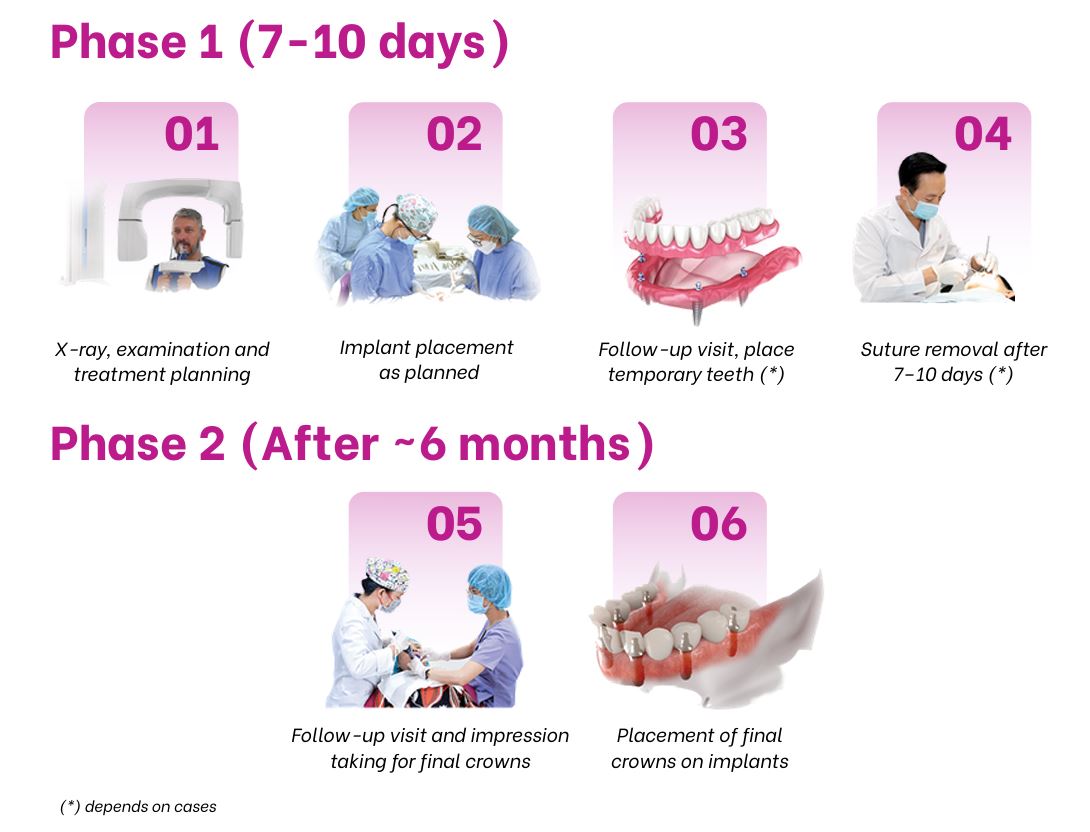
Implants need about 4 to 6 months to integrate, and that healing happens at home with remote follow-up.
5. Looking After Implants, Crowns and Bridges Long Term
Whether you make one trip or two, good results are not only made but kept. The daily routine is refreshingly simple. For implants, keep the area clean with a soft brush and follow the cleaning advice your dentist gives you. For bridges, brush twice a day and clean under and around the bridge with floss threaders or a water flosser, since food and plaque love to gather beneath a replacement tooth. Avoid very hard or sticky foods, and never use your teeth to open packaging. If you grind your teeth, ask your dentist how to protect your restorations.
Professional care matters just as much as the daily routine. The Scottish Dental Clinical Effectiveness Programme’s guidance on caring for dental implants describes regular recall appointments, where the implant and surrounding tissues are checked, professional cleaning is carried out, and patients receive advice on home care, including support to stop smoking where relevant. At Elite Dental, regular check-ups and professional cleaning, roughly every six months, help protect implants. Your own dentist may recommend a different interval for you, and that advice should be followed.
6. Working With Your Own Dentist
Those check-ups usually take place with your local dentist, which makes them your partner for the years that follow. This is our fourth commitment, home-dentist continuity of care, and the earlier you bring them in, the smoother things tend to go. Researchers at the University of Otago, who interviewed New Zealand dental professionals about dental tourism, advise people to plan well and involve their local dentist in the decision, to share their dental records with the overseas dentist before travelling, and to bring home the full record of their overseas treatment. They also note that overseas dental treatment can be cost-effective and of high quality, though problems can sometimes arise.
A few practical steps make a real difference:
- Tell your dentist before you go, and ask whether they are willing to provide routine care afterwards. Policies vary, and some dentists prefer not to take over work they did not plan, so it is far better to know in advance.
- Bring your full record to your first appointment back, including the implant details, scans and notes.
- Share the contact details of your treating team, so the two practices can talk to each other if needed.
- Keep your own dentist informed of any changes, so check-ups and cleaning carry on as planned.
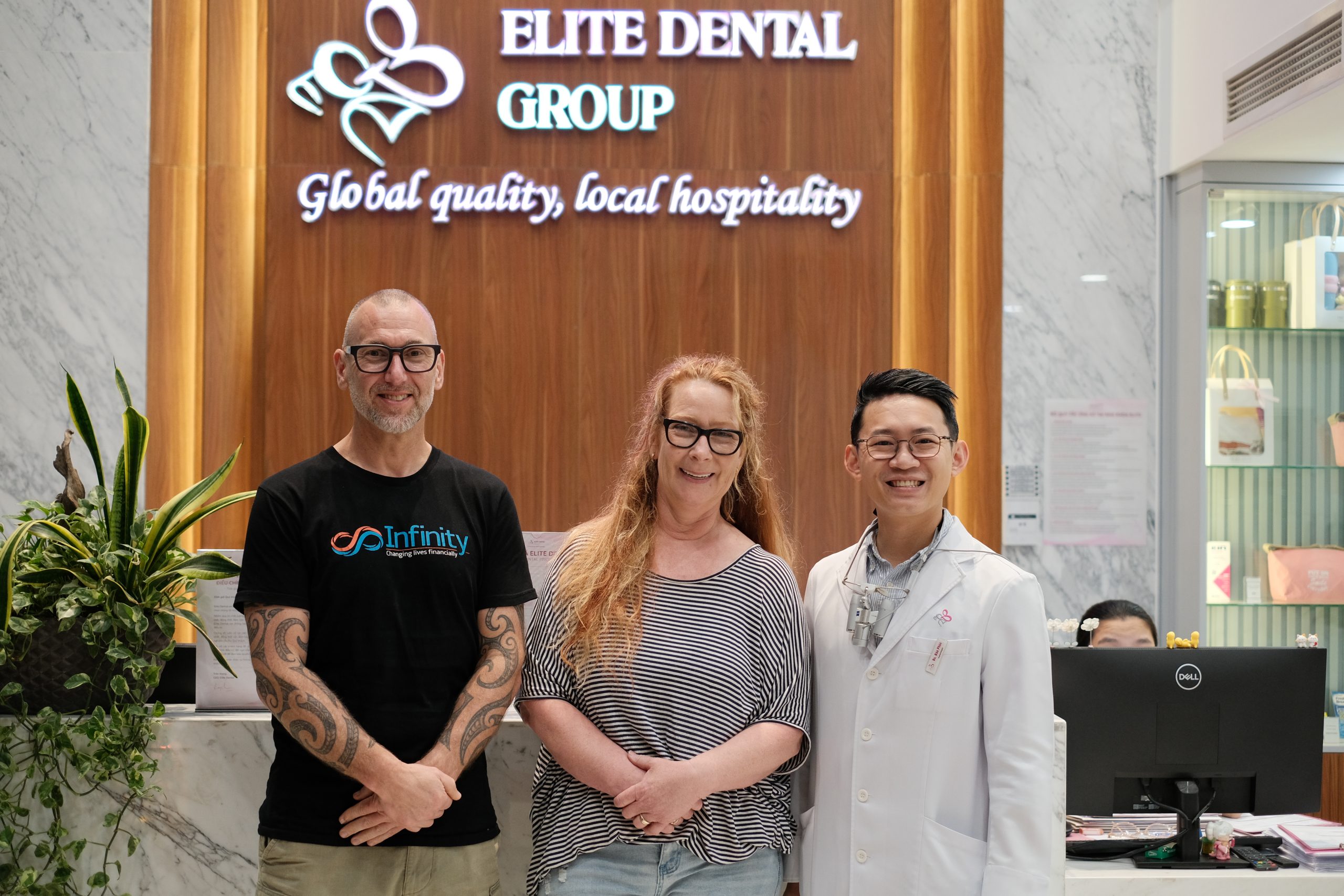
Elite Dental supports all of this by providing full clinical documentation for your home dentist, so that both teams are working from the same picture.
7. If Something Needs Attention: A Step-by-Step Plan
With your records in hand, a follow-up channel open and your own dentist on board, you are ready for the moment something does not feel right. Knowing the sequence in advance is often what turns worry into action:
- Note what you are noticing and when it started. Photographs help.
- Contact your specialist through remote WhatsApp follow-up, using the contact in your records.
- See your own dentist if it cannot wait, and show them your records. They can act on the documentation you brought with you.
- Follow the advice you are given, and keep both teams informed.
- Return for a review if recommended. Elite Dental gives priority scheduling if you return for a review visit.
The University of Otago researchers note that, when complications arise from treatment overseas, reaching the overseas dentist can be difficult. A named contact and an established remote follow-up channel are designed to make that step easier, which is exactly why they belong on your checklist before you book.
8. Warranty and Documentation
Behind all of this sits our third commitment: a manufacturer warranty on implants and restorations. Implant patients also receive a documented and portable warranty record. As with any clinic, ask for the warranty terms in writing before you leave, keep them with your records, and ask who to contact if you think your work needs attention. For a wider look at how to judge any clinic’s documentation and standards, read Is Dental Work in Vietnam Safe? How to Check a Clinic From Overseas Before You Book.
9. Insurance and Paperwork After You Return
The paperwork does not end when you land, and insurance is the part most often assumed rather than checked. Standard travel insurance usually excludes complications from planned dental work, so read your policy, and ask your health fund or insurer whether any part of treatment overseas can be claimed. Do not assume cover. Keep your invoice, treatment records and any insurer correspondence together in one place. Elite Dental’s Document Assistance service helps with insurance, pension and treatment documentation, although your insurer decides whether a claim is paid. For Australian readers, Travel Insurance, Medicare and Overseas Dental Work: What Australians Should Know explains the main points.
10. Staying Connected: Reviews and Returning
Put together, these pieces show that aftercare is not a single event. It is a rhythm of check-ins: the reviews built into your plan, remote follow-up with your specialist, check-ups with your own dentist and, if recommended, a return visit to Ho Chi Minh City, where you receive priority scheduling. Put the dates in your calendar and treat them as part of the treatment, because that is exactly what they are.
Frequently Asked Questions
What aftercare do I get after dental work in Vietnam?
At Elite Dental, aftercare starts when treatment ends and is backed by AACI-accredited safety standards. It includes full clinical documentation for your home dentist, remote WhatsApp follow-up with your specialist, a manufacturer warranty on implants and restorations, home-dentist continuity of care, and priority scheduling if you return for a review visit.
What records should I take home?
Your itemised plan and invoice, treatment notes and consent forms, X-rays and CBCT scans as digital files, photographs, the implant brand, model, size and lot number or the restoration material and laboratory, medicines prescribed, warranty terms in writing and a named contact for follow-up.
When can I fly home after surgery?
Ask your dentist. Avoid flying home immediately after surgery without their agreement, and build rest days into your plan.
What should I do if something feels wrong after I get home?
Contact your specialist through remote WhatsApp follow-up, and see your own dentist if it cannot wait, bringing your records. Report swelling that does not settle, a loose implant or bridge, or worsening pain early.
Will my own dentist look after my work?
Many will provide routine care, but policies vary, and some prefer not to take over work they did not plan. Ask before you travel, and bring your full records.
How often do I need check-ups after implants?
At Elite Dental, regular check-ups and professional cleaning, roughly every six months, help protect implants. Your own dentist may recommend a different interval for you.
Does insurance cover complications from dental work overseas?
Standard travel insurance usually excludes complications from planned dental work. Check with your insurer and health fund, and do not assume cover.
Next Steps
Going home with a healed mouth is the goal. Going home with confidence is what lets you enjoy it. Picture the plane touching down, your records safe in your bag, a message thread open with a team who know your case, and an appointment already booked with your own dentist. That calm is built from small, ordinary preparations, and every one of them can be made before you travel.
Start by reading how to check any clinic’s standards in our guide to dental safety and records, see how treatment and travel fit together in Michael Turner’s two-trip journey, and then send us your questions about aftercare, records and follow-up before you book anything. If you would rather talk it through, call (+84) 28 7306 3838. You do not have to carry the unknown alone. You only have to ask early, and keep asking, for as long as you need.
References
- Elite Dental Vietnam. Is dental work in Vietnam safe? How to check a clinic from overseas before you book. https://elitedental.com.vn/en/is-dental-work-in-vietnam-safe-how-to-check-a-clinic-from-overseas-before-you-book.html
- Elite Dental Vietnam. Dental work in Vietnam for New Zealanders: cost comparison and trip planning. https://elitedental.com.vn/en/dental-work-in-vietnam-for-new-zealanders-cost-comparison-and-trip-planning.html
- Elite Dental Vietnam. How many trips does All-on-4 in Vietnam need? https://elitedental.com.vn/en/how-many-trips-does-all-on-4-in-vietnam-need-a-real-two-trip-case.html
- Elite Dental Vietnam. Is Vietnam worth the long flight? https://elitedental.com.vn/en/is-vietnam-worth-the-long-flight-dental-travel-for-canadians-and-americans-vs-mexico.html
- University of Otago. Dentists’ perspectives on dental tourism (New Zealand Dental Journal study). https://www.otago.ac.nz/news/newsroom/dentists-perspectives-on-dental-tourism
- Scottish Dental Clinical Effectiveness Programme. Periodontal care: general care of dental implants, recall. https://periodontalcare.sdcep.org.uk/guidance/dental-implants/general-care-of-dental-implants/recall/
- American Accreditation Commission International (AACI). Accreditation Standards for Dental Facilities, Version 2.1.
Please note: This article is intended for general information only and is not a substitute for professional medical advice. Aftercare instructions vary with the treatment, so always follow the specific instructions from your treating dentist. Every patient’s oral health is different, so the most suitable care can only be determined by a qualified dentist.