

Table of content
- Contents
- Key Takeaways
- 1. Look for Independent Accreditation and a Published Score
- 2. Ask for the Name of the Doctor Who Will Treat You
- 3. Ask About Experience With Similar Cases
- 4. Confirm the Implant and Material Brand in Writing
- 5. Check the Digital Planning and Diagnostic Imaging Process
- 6. Ask How the Clinic Sterilizes Instruments
- 7. Ask for a Detailed Treatment Plan Before You Travel to Vietnam
- 8. Find Out How Changes to the Treatment Plan Are Handled
- 9. Consider What Happens After You Return Home
- 10. Verify Reviews on Independent Platforms
- Why Is One Accreditation Audit Still Not Enough?
- A Quick Self-Test Before You Book
- How Does Elite Dental Meet These Criteria?
- Conclusion
- Frequently Asked Questions
- References
If you are planning dental treatment in Vietnam, you have probably noticed that clinic websites tend to say much the same thing: modern equipment, experienced doctors, international standards. These same promises appear everywhere. Ho Chi Minh City has dozens of clinics aimed at overseas patients, so the real challenge is not finding options but how to tell them apart and evaluate them before you book a flight to Vietnam.
This guide offers 10 practical criteria you can use when comparing dental clinics in Ho Chi Minh City, from expertise and treatment standards to cost, communication and aftercare. The goal is simple: to help you know what to look for, what to ask and what to verify before making a decision.
Key Takeaways
- Look for quality standards that can be verified. If a clinic mentions certification or accreditation, check the issuing organization, the scope of the certification, and whether the information can be independently verified.
- Know who will be treating you. Ask for the doctor’s name, qualifications, training and experience with the exact procedure you will have, before you travel to Vietnam.
- Know exactly what you will be treated with. For dental implants and other major treatments, ask about the materials or systems used and make sure this is stated clearly in your treatment plan.
- Ask for a clear, itemized quote. You need to understand what the proposed cost includes, and which treatment items may be proposed separately.
Why is choosing a dental clinic from abroad harder than you think?
Dental treatment that involves travelling far, or being done abroad, has features quite different from ordinary services. Every smile is unique and treatment results are usually long-lasting, so careful preparation before each trip is always worth considering. Alongside real photos and reference results, taking extra time to understand a clinic’s philosophy and way of working will also make your trip more fulfilling.
The checklist below is designed as an additional reference point for you. These are suggestions to help you communicate more easily, share your personal expectations and listen to advice from the clinical team, so that you find the solution that is most suitable and reassuring for your journey.
1. Look for Independent Accreditation and a Published Score
Any clinic can write on its website that “we meet international standards.” Independent accreditation is a different matter, because an outside organization has assessed the clinic’s processes and given a result. When comparing clinics, look for the name of a specific organization such as AACI, JCI or ISO, together with a score or certificate you can verify, rather than general adjectives.
AACI (American Accreditation Commission International) is an independent U.S. healthcare accreditation body with a dedicated standard for dental facilities. Its latest edition, Version 2.1, comprises 52 standards across three domains: governance, clinical practice and infrastructure. These standards are built on ISO 9001:2015, WHO recommendations and U.S. CMS/Medicare requirements.
What makes this useful for patients is that a facility cannot simply declare that it meets the standards. It must go through a structured assessment covering process standardization, evidence review, a pre-assessment and a final evaluation, and then receives a specific score.
The standards cover many areas. Four representative ones show how they apply to everyday safety:
- Infection control, including control of the instrument sterilization process and management of sterilization systems.
- Patient identification, ensuring each patient receives the treatment plan intended for them.
- Risk management, including emergency response protocols within the clinic.
- Radiation safety, ensuring clear diagnostic images with a reasonably low radiation dose.
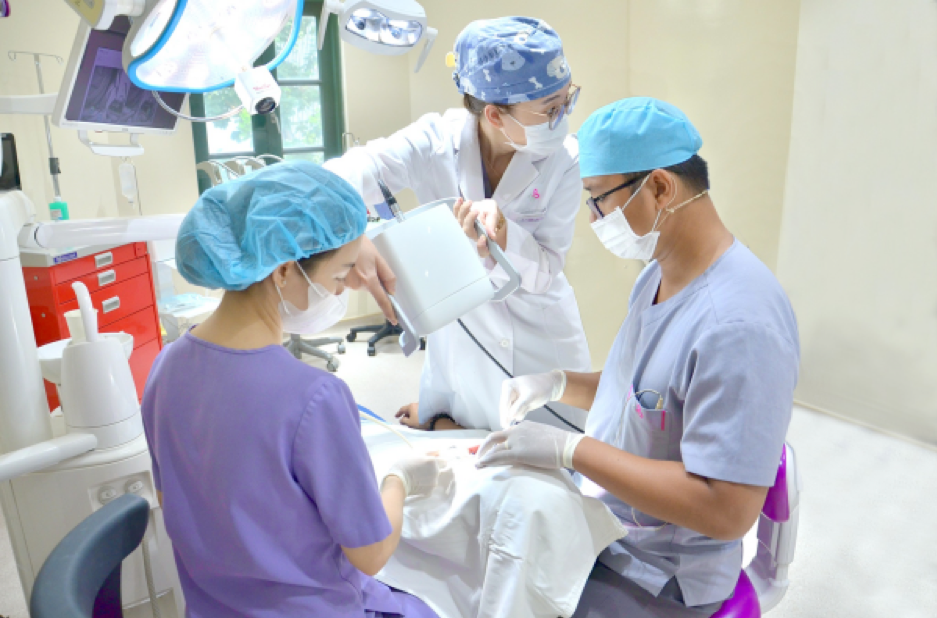 A quality clinic must ensure 4 factors: infection control, patient identification, risk management and radiation safety
Dental records, clinical photographs and equipment management are also within the scope of assessment. If a clinic mentions accreditation, ask to see the certificate and score, and ask whether it applies to all branches.
Elite Dental is accredited by AACI with a score of 95.33/100 and is the first dental system in Vietnam to achieve this accreditation.
2. Ask for the Name of the Doctor Who Will Treat You
“Our team of experts” really tells you very little. What matters is who will actually perform your procedure, and whether that person’s training suits your case. Full-arch implants and veneers require different specialist skills, so a good general dentist is not necessarily the right person for a complex surgery.
Before booking, ask for the doctor’s name, qualifications, training institutions and experience with the exact procedure you need. Clinics that value professional competence usually keep clear records of each doctor’s scope of practice, meaning the procedures their qualifications and experience allow them to perform. This system routes complex cases to doctors with the right background and allows specialties to coordinate when the treatment plan needs adjusting.
If you only find out who your treating doctor is after you have arrived in Vietnam, that is a sign worth weighing.
3. Ask About Experience With Similar Cases
For complex treatments such as implant dentistry, experience with cases similar to yours can be an important factor to consider. Rather than focusing only on how long a clinic has been operating, it can be helpful to understand how familiar the clinical team is with the type of treatment you are considering.
A simple question is: how often does the clinic treat cases similar to mine, and how does the clinical team monitor treatment outcomes? A reputable clinic should be able to explain its experience and approach to outcome monitoring in a clear and straightforward way.
The goal is not to compare clinics based on a single number or marketing claim. What matters is having enough information to understand whether the clinical team’s experience is relevant to your particular case.
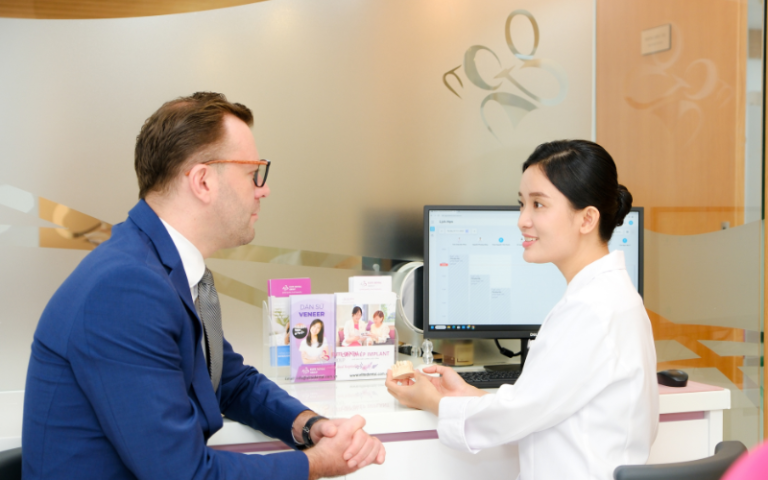 What matters isn’t how long the clinic has been operating, but how familiar the clinical team is with your specific case.
4. Confirm the Implant and Material Brand in Writing
The implant will stay in your jawbone for many years, and a dentist back home may need to maintain or manage it in the future. Many brands, including Straumann, Neodent/Hahn and the major Korean systems, are legitimate choices at different price points. What matters is that you know exactly which one you are receiving.
Ask for the implant brand and system to be stated in writing, together with the manufacturer’s documentation or an implant card you can later give to your own dentist. A quote that only says “premium imported implants” without naming the brand is something to be cautious about. Components of unknown brand are one of the things most often cut at low-cost clinics, and they are very hard to detect after treatment.
5. Check the Digital Planning and Diagnostic Imaging Process
Implant placement depends on bone volume and on the position of nerves and sinuses. 3D CBCT imaging, guided surgical planning and CAD/CAM restorations allow the doctor to plan before the procedure instead of handling situations during surgery. These tools are common at reputable implant clinics, so ask what data your surgical plan is built on.
Diagnostic imaging also relates to safety. X-rays and CT scans provide essential information but involve radiation exposure, so the dose needs to be controlled. A well-run clinic takes images only when necessary, chooses the method that suits the diagnostic goal, calibrates equipment regularly and uses protective measures where appropriate, with particular care for children and pregnant women.
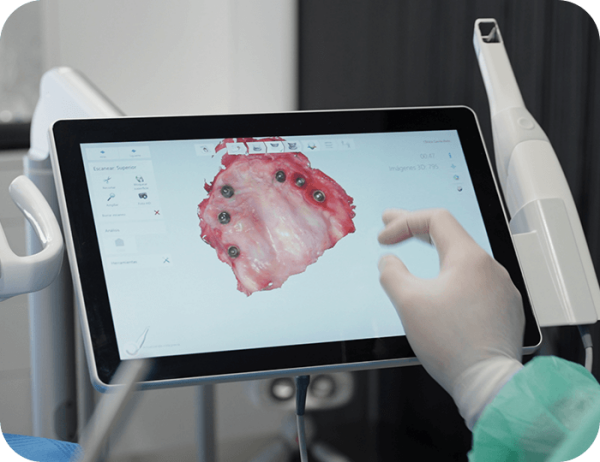
The surgical plan is simulated in 3D beforehand – not handled on the fly during surgery
If a complex case is planned from a single panoramic film, or no one can explain why you need a particular type of scan, ask more questions.
6. Ask How the Clinic Sterilizes Instruments
Dental treatment takes place in an environment with a risk of infection, so sterilization is a basic condition for safety, not an optional factor. The process also should not depend on the habits of a single staff member.
A compliant process goes through consecutive steps: collecting and cleaning instruments after use, packaging, sterilizing at the appropriate temperature and time, storing under sterile conditions, and tracing each instrument set so that every instrument used on a patient can be identified. Good clinics also disinfect surfaces after each case, use single-use supplies where appropriate and follow hand hygiene procedures.
Consistent compliance with every step matters no less than having modern equipment.
You can ask the clinic to explain its process specifically, who is responsible for checking it and how often the checks are done. A specific answer is a positive sign. “We follow strict hygiene” is not yet an answer.
7. Ask for a Detailed Treatment Plan Before You Travel to Vietnam
A verbal quote or a single total figure is hard for you to check and hold anyone to. An itemized treatment plan, based on your own X-rays or scans, shows what the clinic intends to do and what each item costs.
Before booking flights, you should have a cost breakdown by procedure, the implant or material brand clearly stated, and the total cost confirmed in writing.
If a clinic says “come first and we will quote you then,” you are being asked to carry that risk yourself.
8. Find Out How Changes to the Treatment Plan Are Handled
Sometimes findings during treatment mean the original plan has to change, for example when additional bone grafting is needed or a different crown material is more suitable. This can happen in dentistry. What you want to avoid is an unexpected charge when you are already in the treatment chair and have committed to the trip.
Before booking, ask how additional items are priced and how you approve them. A clear process agreed in advance protects your interests. Vague answers, or pressure to agree on the spot, suggest the opposite.
9. Consider What Happens After You Return Home
Dental treatment does not always end when you leave the clinic, particularly for implants, restorations and other complex procedures. Before choosing a clinic, consider how follow-up care is organised and what support is available once you are back home.
You may want to ask about follow-up appointments, communication channels, treatment records and documentation, as well as how the clinic can support you if questions or concerns arise after you return.
For international patients, a clear plan for ongoing communication and aftercare can be an important part of the overall treatment experience.
10. Verify Reviews on Independent Platforms
Testimonials on a clinic’s own website have usually been selected and edited. Cross-check reviews on Google, dental tourism platforms and forums for expats or travelers, ideally looking for patients from your own country.
Read the negative reviews as well, and pay attention to how the clinic responds to them.
Why Is One Accreditation Audit Still Not Enough?
A single audit shows that a clinic met the standard at one point in time. What you really want to know is whether those standards have become part of daily operations.
Two questions can help you judge this: does the accreditation apply to all the branches you might visit, and how often is the clinic reassessed?
Standards that are applied consistently across multiple locations and periodically assessed by an independent party help ensure that the quality of care does not depend on which branch you are assigned to.
A Quick Self-Test Before You Book
If a clinic can answer all 10 criteria above clearly, specifically and in writing, without you repeatedly having to ask for more information, that is a positive signal, regardless of price.
If an answer stays vague, treat that vagueness as the information worth noting, rather than being persuaded by the clinic’s confident tone.
How Does Elite Dental Meet These Criteria?
Elite Dental Vietnam is a premium international dental system in Ho Chi Minh City, built on U.S.-standard quality, evidence-based dentistry, internationally trained doctors and patient-centered care.
Elite Dental is the first dental clinic in Vietnam to achieve AACI accreditation, with a score of 95.33/100 under Version 2.1 for dental facilities. The same quality standards framework is applied at all three branches in Ho Chi Minh City, covering clinical practice, governance and infrastructure.
With an orientation toward evidence-based dentistry and the philosophy of “minimal intervention, maximum preservation,” Elite Dental combines scientific clinical practice with modern technology to support diagnosis and treatment. The team includes more than 30 specialist doctors trained internationally in France, Italy, the U.S. and Japan, and complex implant treatments are led by Assoc. Prof. Dr. Tran Hung Lam, DDS, PhD, Chief Medical Officer of Elite Dental and President of ITI Section Vietnam.

Beyond clinical standards, Elite Dental also emphasizes dedication and patient support, with a process coordinated throughout, from consultation and treatment planning to post-treatment follow-up. For international patients, this includes support throughout the treatment journey, so that patients are fully informed and feel reassured before, during and after treatment.
Conclusion
Clinics competing for international patients in Ho Chi Minh City often promote themselves in fairly similar ways, but the real differences appear when you ask specific questions.
Independent accreditation, clearly identified doctors, transparent information about materials, a verifiable sterilization process, a written quote and aftercare that remains effective when you return home are the factors that help you judge whether a good price truly comes with good quality of care.
Frequently Asked Questions
What is the most reliable sign when comparing dental clinics?
Independent third-party accreditation, with a clearly named accrediting organization and a published score, is more reliable than a general claim that a clinic “meets international standards.”
How can I tell whether a dental clinic is safe?
Ask the clinic how it controls infection, ask it to describe its sterilization steps, and find out whether it is recognized by an independent organization. A dentistry-specific accreditation such as AACI can serve as an objective reference point.
How do I confirm the doctor’s qualifications before travelling to Vietnam?
Ask for the doctor’s name, qualifications, training institutions and experience with the procedure you plan to have. A reputable clinic will provide this information in writing before you book.
What should a written treatment plan include?
A detailed breakdown by procedure, based on your own X-rays or scans, clearly stating the brand of materials or products and confirming the total cost.
What if my treatment plan changes when I am already in the dental chair?
Ask before booking how additional findings or items are priced and approved. A process agreed in advance helps you avoid unexpected costs.
Are dental X-rays and CT scans safe?
These methods provide the information needed for accurate diagnosis and treatment planning. A well-run clinic will only take images when necessary and keep the dose at a reasonable level, with particular care for children and pregnant women.
How can I check whether reviews are genuine?
Cross-check reviews on Google, dental tourism platforms and forums for expats, prioritizing patients from your own country rather than relying only on testimonials on the clinic’s website.
References
- Tuoi Tre News. “Vietnamese dental group achieves AACI quality accreditation of US.” 8 October 2025.
- U.S. Centers for Disease Control and Prevention (CDC). Guidelines for Infection Control in Dental Health-Care Settings.
- World Health Organization (WHO). Patient safety materials.
Please note: This article is intended for general information only and is not a substitute for professional medical advice. Every patient’s oral health is different, so the most suitable treatment can only be determined after an in-person consultation and a personalized assessment by a qualified dentis