



Table of content
- 1. Short answer
- 2. Top 05 Things to Know About a Receding Chin
- 3. What Is a Receding Chin?
- 4. What Causes a Receding Chin?
- 5. How a Receding Chin Affects Your Health
- 6. Orthodontic Treatment for a Receding Chin
- 7. Why Choose Elite Dental Vietnam for Receding Chin Correction
- 8. What to Ask During Your Consultation
- 9. Frequently Asked Questions
- 10. Conclusion
- Your Safety at Elite Dental Vietnam
1. Short answer
A receding chin can be cosmetic, dental, skeletal, or a combination of these. Orthodontics may help when tooth position or bite relationship makes the chin look recessed. In severe skeletal cases, orthodontic treatment alone has limits, and an in-person specialist evaluation is needed to advise the appropriate path. Diagnosis should distinguish tooth position, jaw relationship, airway/TMJ symptoms, and facial goals before treatment is chosen.
2. Top 05 Things to Know About a Receding Chin
1. A receding chin (mandibular retrognathism) means the lower jaw or chin sits further back than the upper face — sometimes a purely cosmetic concern, sometimes a functional one tied to bite, breathing, and joint health.
2. The first decision is whether the receding chin is dental in origin or skeletal. Dental means the teeth are misaligned but the jaw bones are balanced; skeletal means the bones themselves are undersized or set back. The appropriate treatment depends entirely on this distinction.
3. Common causes include genetics, a Class II malocclusion, asymmetric childhood growth, prior trauma, and age-related bone resorption — and many patients have more than one factor at play.
4. Orthodontic treatment is the primary path for most cases, from mild dental Class II to moderate skeletal patterns. Severe skeletal patterns sit beyond what orthodontics alone can fully correct, and the right path is decided after an in-person evaluation.
5. Elite Dental Vietnam provides the diagnostic workup and orthodontic treatment in-house. When a case extends beyond what orthodontics can address, the orthodontist explains the realistic options during the consultation so the next step is clear.
| 📞 Call Elite Dental Vietnam at (+84) 28 7306 3838 to schedule a consultation. |
|---|
3. What Is a Receding Chin?
A receding chin describes a chin that appears set back relative to the upper jaw and the midface. In clinical terminology, this skeletal pattern is called mandibular retrognathism — the mandible is positioned posteriorly, creating a convex facial profile. The terms recessed jaw and weak chin are often used interchangeably in everyday language, although strictly speaking they can refer either to the entire lower jaw being underdeveloped or to the chin point alone being underprojected.
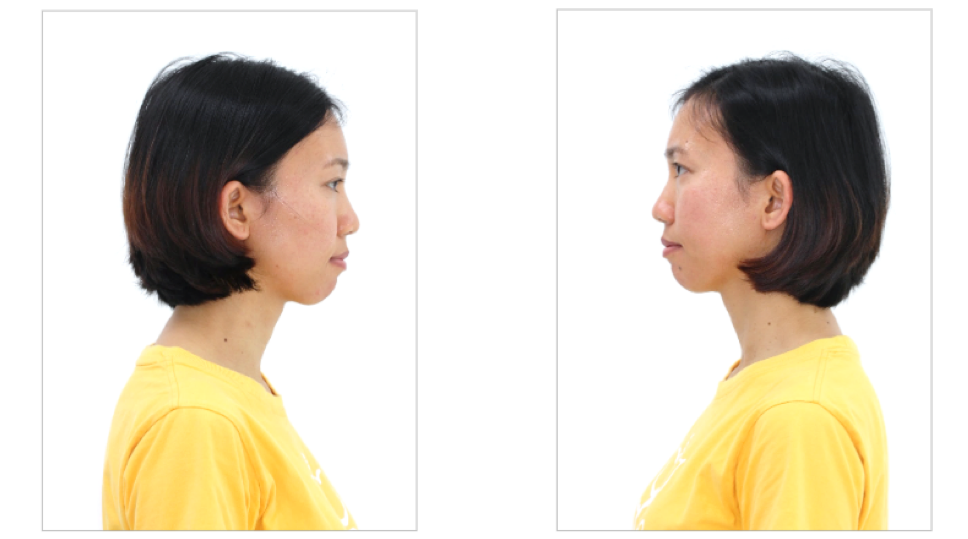
Image of the face of a customer with a receding chin (short chin) that makes the face unbalanced.
Severity ranges widely. Mild cases involve a purely cosmetic concern — the chin looks small or recessed in profile view but the bite functions normally. Moderate cases sit between aesthetics and function, with a measurable Class II relationship and noticeable bite consequences. Severe cases involve a substantial skeletal discrepancy that affects occlusion, airway space, and facial harmony, and typically need in-person specialist evaluation to determine the right approach.
It is important to distinguish between a skeletal and a dental receding chin. In a skeletal case the bone itself is undersized or set back. In a dental case the teeth are misaligned, making the chin appear recessed while the bone is normal. Accurate diagnosis determines whether orthodontic treatment is the appropriate path, and when a case needs evaluation beyond what orthodontics can address.
Self-Assessment: Profile Photo Test
Take a side-profile photograph with your head in a natural resting position — eyes looking straight ahead, lips relaxed. Imagine a vertical line from the bridge of your nose down to your chin. In a balanced profile, the tip of the chin touches or comes very close to this line. If your chin falls noticeably behind the line, you may have a receding chin. The test gives a useful first impression but cannot replace clinical measurement, which an orthodontist performs using diagnostic imaging rather than visual estimation.
Self-Assessment: The Finger Test
Place your index finger vertically from the base of your nose to the tip of your chin. If there is a clear gap between the finger and the soft tissue of the chin, this suggests the chin projection is reduced. A gap of more than 5 millimeters is generally considered significant, although individual variation is wide and the soft-tissue position can mask or exaggerate the underlying skeletal pattern.
When Self-Tests Are Not Enough
A specialist evaluation typically includes diagnostic imaging as the standard initial study, with 3D Cone Beam CT added for complex cases that require detailed mapping of the mandible, condyles, and airway. The orthodontist measures the skeletal and dental relationships from the imaging and reviews the dental record together with a clinical examination. These findings together determine whether treatment should focus on the teeth, on the bone, or on both — and whether the case needs evaluation beyond what orthodontics can address.
4. What Causes a Receding Chin?
A recessed chin typically results from one or a combination of the following factors. Genetics is the most common single explanation, because mandibular retrognathism is highly hereditary. If one or both parents have a short chin or a Class II jaw relationship, the same pattern is significantly more likely to appear in their children. Genetic factors determine the overall growth potential of the mandible during childhood and adolescence.
A Class II malocclusion is the dental pattern most commonly associated with a receding chin. The upper jaw sits forward relative to the lower jaw, or the lower jaw is set back, and the result is an overjet of the front teeth and a chin that looks recessed in profile. In mild Class II cases, orthodontic treatment may correct the bite and substantially improve the perceived chin position. Skeletal Class II cases — where the underlying bones, not just the teeth, are mismatched — usually need in-person specialist evaluation, because orthodontics alone has limits in repositioning the jawbone.
Childhood development factors also contribute. Chronic mouth breathing, prolonged thumb-sucking beyond age four, and poor tongue posture can influence mandibular growth patterns during the years when the jaw is still forming. These habits do not cause retrognathism on their own, but they can amplify a genetic predisposition by altering the direction of jaw growth. Trauma to the mandible during the growth years — fractures from sports or falls, including condylar fractures — can disrupt growth-plate activity and result in asymmetry or underdevelopment that becomes obvious later.
Aging and bone resorption add a slower but cumulative factor. Jawbone density decreases with age, particularly after tooth loss. The change primarily affects the alveolar ridge, but it can also reduce chin projection over time, especially in patients who have lost back teeth and worn removable dentures for many years. Patients who have experienced significant jawbone resorption may notice a more recessed chin appearance compared with their younger profile.
5. How a Receding Chin Affects Your Health
A receding chin is not purely cosmetic. Depending on severity, mandibular retrognathism is associated with several functional health issues that can affect daily life and long-term well-being. Temporomandibular joint disorders (TMJ/TMD) are more common in patients with a Class II skeletal pattern, because abnormal jaw positioning places extra stress on the joints. The result can be chronic jaw pain, clicking or popping sounds, headaches, and limited mouth opening.
Obstructive sleep apnea is the most clinically important association. A recessed mandible reduces the space behind the tongue and narrows the upper airway, which is a well-documented risk factor for obstructive sleep apnea — a condition where breathing stops repeatedly during sleep. Sleep apnea is in turn linked to hypertension, cardiovascular disease, and daytime fatigue. Patients with snoring or sleep complaints alongside a receding chin should be evaluated for this rather than treated as a purely cosmetic case.
Chronic mouth breathing and chewing or speech difficulties are the other functional consequences. Restricted airway space due to jaw positioning can force habitual mouth breathing, contributing to dry mouth, increased cavity risk, and gum inflammation. Severe mandibular retrusion impairs proper occlusion, makes chewing less efficient, and increases wear on specific teeth; some patients also experience speech difficulties with certain consonant sounds. If you experience jaw pain, snoring, or persistent breathing issues alongside a receding chin, the evaluation should address function rather than appearance alone.
For a closer look at how skeletal relationships are diagnosed before treatment, see our overview of how braces change your face shape
| 📞 Considering treatment for a receding chin? Contact Elite Dental Vietnam — hotline (+84) 28 7306 3838 — to schedule a consultation. |
|---|
6. Orthodontic Treatment for a Receding Chin
The appropriate treatment depends on whether the receding chin is dental, skeletal, or a soft-tissue cosmetic concern. The most common non-surgical path is orthodontic treatment. Severe skeletal cases may extend beyond what orthodontics alone can fully correct.
Orthodontics (Braces or Aligners)
Orthodontic treatment can correct tooth alignment and improve the bite, which may enhance the chin’s appearance in mild Class II cases. Braces typically require 18 to 30 months, during which the teeth are gradually repositioned to achieve a functional bite. Elite Dental Vietnam offers metal braces, ceramic braces, and Invisalign systems, with personalized treatment planning anchored to each case. Orthodontics is most appropriate when the receding chin is primarily dental in origin; it cannot reposition the jaw bone itself, which is the limit patients should understand from the start.
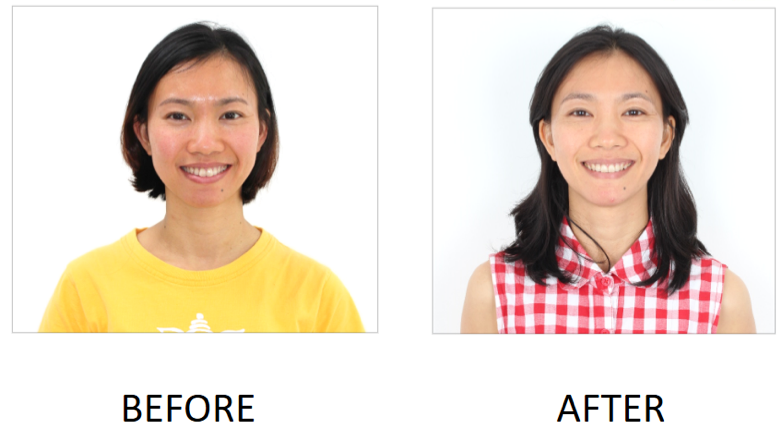
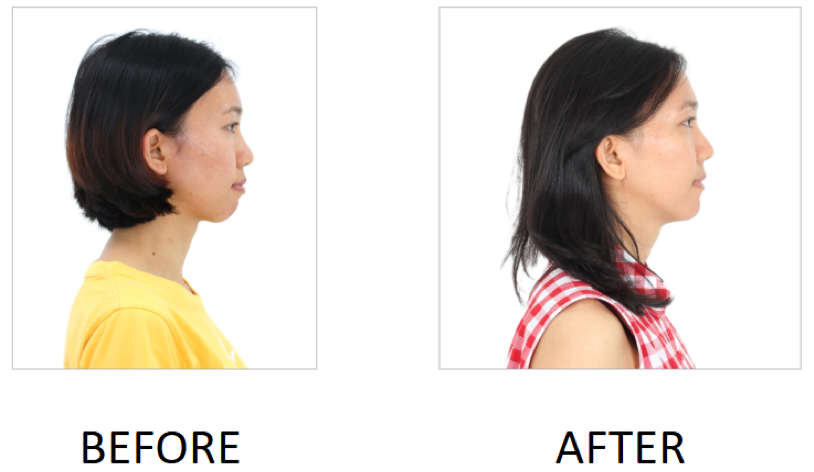
The Elite Dental Vietnam Orthodontic Approach
What sets Elite Dental Vietnam apart is the treatment plan you receive. The orthodontic team has effectively treated many cases that initially appeared to need surgery — through in-depth orthodontic planning, the right timing, and the right method. After a complete diagnostic workup with intraoral, extraoral, and X-ray imaging, the orthodontist will:
- Analyze the relationships between teeth, jawbone, and occlusion using cephalometric tracing.
- Assess the degree of malocclusion and the overall oral health.
- Develop a treatment plan tailored to your case for long-term effectiveness and safety.
7. Why Choose Elite Dental Vietnam for Receding Chin Correction
Receding chin correction is a multi-specialty decision, not a single procedure. Choosing the right clinic is less about which technique is offered and more about whether the diagnostic depth at intake matches the realistic outcome the case will support.
The orthodontic team is led by Dr. Do Quynh Nhu, DDS — Orthodontic Specialist — and includes clinicians with training in skeletal-dental relationships, facial aesthetic orientation, and growth and development assessment. For severe skeletal cases that extend beyond orthodontic correction, the team explains the limits clearly and advises the appropriate next step after an in-person evaluation.
Each receding chin case begins with a comprehensive case assessment evaluating skeletal-dental relationships, chin projection, facial aesthetic balance, and treatment goals. The team then creates an individualized treatment plan using diagnostic imaging, tooth-movement simulation, and personalized planning — all delivered under AACI accreditation (95.33/100).
The orientation across intake, diagnosis, treatment planning, and follow-through is toward facial aesthetics in addition to bite correction. The teeth and jaw are the means; the patient’s face is the outcome.
8. What to Ask During Your Consultation
Use the consultation to connect the general guidance in this article to your own diagnosis, budget, timeline, and treatment pathway. Useful questions include:
For international or expat patients, also ask whether records can be reviewed before arrival and how much time should be reserved in Ho Chi Minh City for examination, treatment, and follow-up.
- What diagnostic records are needed before deciding on treatment?
- Can orthodontics alone improve my profile in my case?
- Is my receding chin mainly dental, skeletal, soft-tissue related, or mixed?
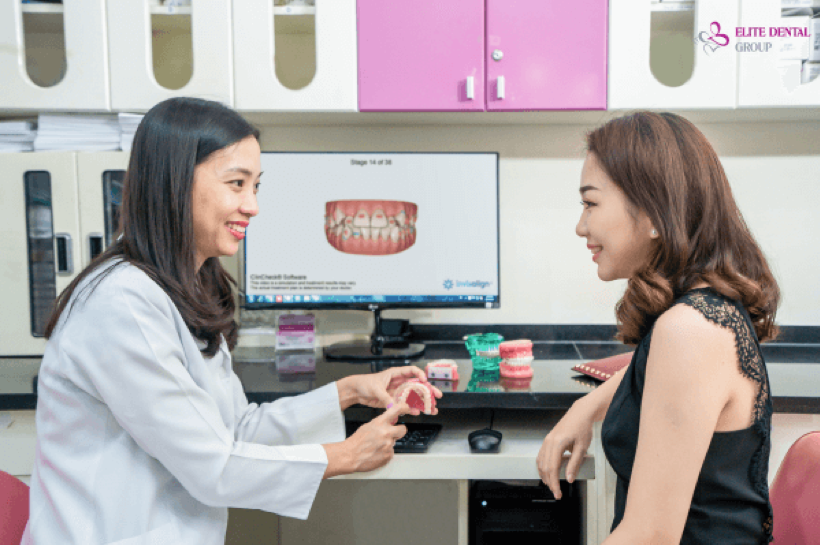
Elite Dental doctors will provide detailed advice on the orthodontic plan to correct a receding chin, ensuring customers understand and feel assured.
9. Frequently Asked Questions
Can braces alone fix a receding chin?
For mild dental Class II cases, braces can meaningfully improve the appearance and function. Braces cannot move the jaw bone itself, so for moderate to severe skeletal patterns, orthodontics alone will not fully resolve the receding chin. An in-person specialist evaluation is needed to advise the appropriate path.
How long does orthodontic treatment for a receding chin take?
Most orthodontic cases take about 18 to 30 months, depending on how much the teeth need to move and the complexity of the bite. Mild dental Class II cases tend to finish sooner, while moderate cases can take longer. The orthodontist gives a case-specific estimate after reviewing your diagnostic imaging.
Will braces change my facial profile?
In mild dental Class II cases, correcting tooth position and the bite can modestly improve how the chin reads in profile. Braces move teeth, not the jawbone, so the change is limited when the receding chin is mainly skeletal. The orthodontist will set a realistic expectation before treatment begins.
Does mewing work for adults?
There is no peer-reviewed scientific evidence that mewing — conscious tongue posture adjustment — can meaningfully change jaw structure in adults whose bones have finished growing. Maintaining good tongue posture is generally helpful for oral health, but it should not be considered a substitute for professional orthodontic treatment for mandibular retrognathism in adults.
What is the difference between a receding chin and a recessed jaw?
The terms are often used interchangeably, but strictly speaking a receding chin describes the chin point being underprojected, while a recessed jaw describes the entire lower jaw being set back. Treatment differs by what is driving the issue. A dental-origin receding chin can often be improved with orthodontic treatment. A recessed jaw typically requires orthodontic treatment as well, and severe skeletal cases are assessed in person to advise the right path. Accurate diagnosis with diagnostic imaging determines the source of the discrepancy.
10. Conclusion
A receding chin is a common concern, and orthodontic treatment is the right path for many cases — from mild dental Class II to moderate skeletal patterns. Severe skeletal patterns have limits that an in-person evaluation is well placed to clarify. The single most important step in any case is an accurate diagnosis that distinguishes dental from skeletal causes — because the treatment paths are very different, and so are the timelines, costs, and realistic outcomes.
Elite Dental Vietnam provides the diagnostic workup and orthodontic treatment in-house under AACI accreditation. For severe skeletal cases that extend beyond what orthodontics can correct, the orthodontist explains the limits and advises the appropriate next step after an in-person evaluation.
Wondering whether your receding chin is purely cosmetic or has functional consequences? A 30-minute consultation at Elite Dental Vietnam can clarify which treatment path fits your case. You will leave with measured numbers and a clear explanation of the realistic options.
Your Safety at Elite Dental Vietnam
Elite Dental is the first dental system in Vietnam to receive accreditation from the American Accreditation Commission International (AACI). Under AACI Dental Standards Version 2.1, Elite Dental achieved a score of 95.33 out of 100 and continues to hold this accreditation in 2026. You can read more on our AACI accreditation page.
AACI accreditation serves as an independent third-party validation of the quality standards that Elite Dental has consistently maintained through its rigorous clinical and operational practices over many years. The accreditation is valid for one year and is subject to periodic reassessment and renewal.
The accreditation was awarded on September 8, 2025, and officially announced on October 20, 2025. It applies across all three Elite Dental locations: Huynh Tinh Cua, Tu Xuong and Metropole (Thu Thiem).
Consultation Hotline: (+84) 28 7306 3838
Website: elitedental.com.vn
| 📞 If you are weighing treatment for a receding chin, call Elite Dental Vietnam at (+84) 28 7306 3838 to book a consultation including diagnostic imaging and clinical assessment. |
|---|
Elite Dental Vietnam — AACI-accredited | (+84) 28 7306 3838 | elitedental.com.vn/en
Tu Xuong · Huynh Tinh Cua · Metropole (Thu Thiem)
References
1. Proffit WR, Fields HW, Sarver DM. Contemporary Orthodontics. 6th ed. Elsevier; 2019. https://www.elsevier.com/
2. American Association of Orthodontists. Types of Orthodontic Problems (Class II / Retrognathia). https://aaoinfo.org/
3. Young T, Peppard PE, Gottlieb DJ. Epidemiology of obstructive sleep apnea: a population health perspective. Am J Respir Crit Care Med. 2002;165(9):1217-1239. https://pubmed.ncbi.nlm.nih.gov/11991871/
4. World Health Organization. Oral Health Fact Sheet. https://www.who.int/news-room/fact-sheets/detail/oral-health
Disclaimer: The information in this article is for educational purposes only and does not replace an in-person consultation with a qualified orthodontist. Contact Elite Dental Vietnam for personalized advice.

