

Table of content
- Contents
- Key Takeaways
- 1. A Standard Without a Name Attached
- 2. A Treating Dentist Who Isn’t Clearly Introduced
- 3. An Implant Brand That Isn’t on Paper
- 4. A Quote That Only Becomes Firm on Arrival
- 5. No Agreed Process for Changes Mid-Treatment
- 6. Pressure to Pay Before There Is a Written Plan
- 7. Unclear Plan for Aftercare Once You Are Home
- 8. Reviews From Only One Place
- Five Questions That Do Most of the Work
- How Does Elite Dental Meet These Criteria?
- Conclusion
- Frequently Asked Questions
- References
Dental work abroad can cost significantly less than treatment at home, but price alone is a poor basis for choosing a clinic. When quotes range from half to a third of domestic prices and every website promises similar results, the more important question is which clinic can be trusted with your treatment, and whether that can be verified before you book a flight.
Most patients who travel for dental care are satisfied with the outcome. When problems do occur, they rarely stem from the country of treatment itself. More often, they come from a lack of reliable information at the clinic selection stage. Most of these risks can be recognized early if patients know what to look for, which is what the eight red flags below are designed to help with.
Key Takeaways
- Clinic quality outweighs location. The deciding factor is whether a clinic provides specifics in writing before you travel, not which country it operates in.
- Claims need evidence. Phrases such as “international standards” or “experienced team” carry weight only when supported by a named accrediting body, a verifiable score or a documented record.
- Pricing should be fixed before departure. A quote that is confirmed only once you arrive limits your ability to compare options or withdraw from treatment.
- Consistency enables comparison. Put the same set of questions to every clinic on your shortlist and compare the written answers side by side.
1. A Standard Without a Name Attached
“International standards” appears on a great many clinic websites, but on its own the phrase does not say who checked, what was checked or what the result was. Without those details, it is a marketing line rather than evidence.
Independent accreditation closes that gap. An organization outside the clinic evaluates how it operates and issues a result. When a clinic mentions accreditation, look for the name of the accrediting body, a score or certificate that can be verified, the year it was issued, and whether it covers the specific branch where you will be treated.
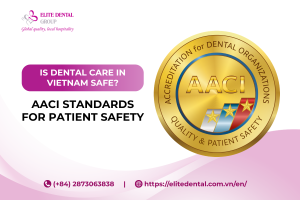
AACI (American Accreditation Commission International) is one example. It is an independent U.S. healthcare accreditation body with a dedicated standard for dental facilities. Its latest edition, Version 2.1, contains 52 standards across three areas (governance, clinical practice and infrastructure), built on ISO 9001:2015, WHO recommendations and U.S. CMS/Medicare requirements. A clinic cannot simply declare compliance. It goes through process standardization, evidence review, a pre-assessment and a final evaluation before receiving a score.
For patients, this translates into everyday safeguards: how instruments are sterilized, how the clinic makes sure each patient receives the treatment planned for them, what happens if someone needs emergency help in the chair, and how X-rays are taken so that images are clear and the radiation dose stays reasonably low.
2. A Treating Dentist Who Isn’t Clearly Introduced
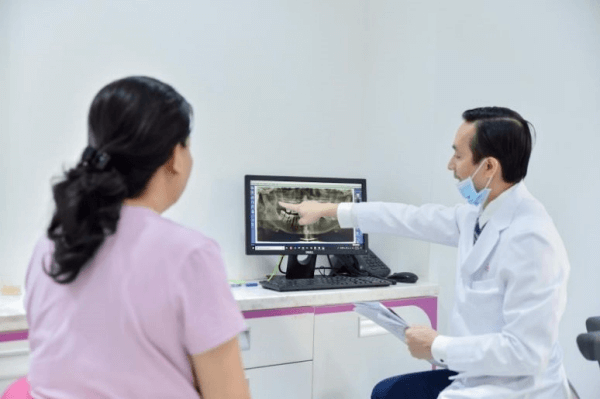
Different procedures call for different skills. A full-arch implant restoration and a set of veneers are not the same kind of work, so complex cases are best handled by a clinician who performs them regularly. Before booking, ask for the dentist’s name, degree, training institutions and experience with your specific procedure.
“Our team of specialists” is a reasonable starting point, but it should lead to a specific name and a track record. Clinics that take this seriously often maintain a scope of practice for each dentist, recording the procedures their qualifications and experience support.
3. An Implant Brand That Isn’t on Paper
An implant stays in the jaw for years. At some point, quite possibly after you are back home, a dentist may need to tighten, repair or replace a part. If the records describe the implant only in general terms, that dentist may not recognize the system or be able to source a matching component.
Straumann, Neodent/Hahn and the major Korean systems are all legitimate options at different price points, so a lower price does not by itself signal a problem. What matters is documentation: the brand and system in writing, plus manufacturer documentation or an implant card that you can show to your dentist at home. Any clinic using clearly documented products should be able to provide this easily.
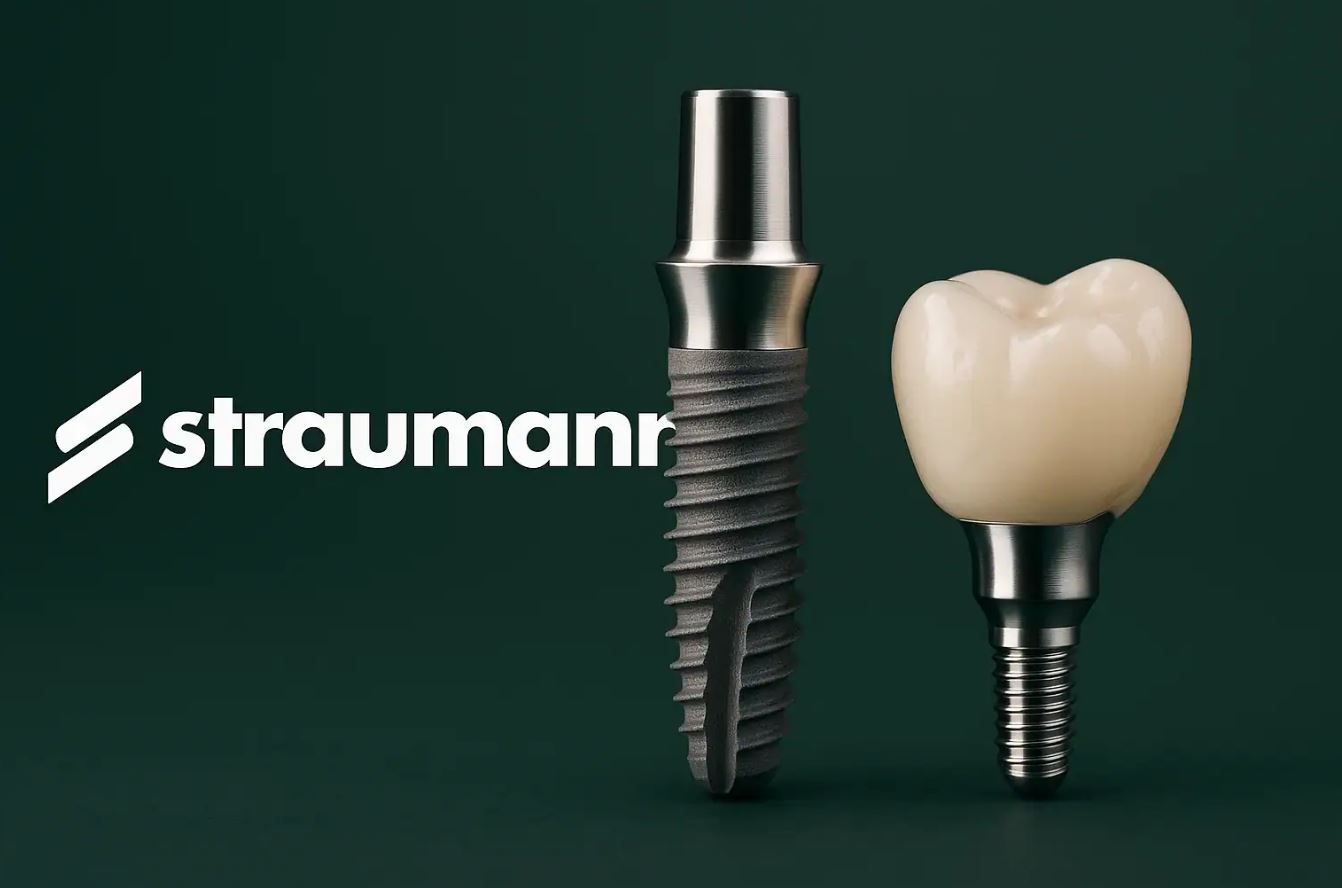
Straumann is the most popular implant choice among patients at Elite Dental.
4. A Quote That Only Becomes Firm on Arrival
Some clinics state that they can only give an exact figure after meeting the patient in person. In that case, patients often have to book flights and accommodation without knowing the total cost of treatment, which makes it harder to compare clinics and to plan a budget for the whole trip.
A written, itemized quote before flying addresses this. It should be based on the patient’s own X-rays or scans, break the price down by procedure, name the implant or material brand and confirm the total. Most clinics can prepare one remotely. When the price is agreed before travel, the financial risk is clearly shared between both sides.
5. No Agreed Process for Changes Mid-Treatment
Treatment plans sometimes need to change. A bone graft may turn out to be necessary, or a different crown material may suit the patient better. That is a normal part of dentistry. What matters is whether the patient learns about the change with time to think, or with anesthesia already administered and nowhere else to turn.
Before booking, ask how changes are priced and whether the patient approves them first. A clear, pre-agreed answer is protective. A loose “we will sort it out when you get here” says a lot about how later conversations will go.
The way a clinic is organized also matters. When all the specialists a treatment may need work under one roof, a change of plan can be assessed by the same team and reflected in the written plan, rather than being passed between separate providers. This is how Elite Dental operates. Watch our video to see how the all-under-one-roof model works in practice:
6. Pressure to Pay Before There Is a Written Plan
Time-limited discounts, “last slots this month” messages and requests for large deposits before a treatment plan exists can make waiting feel costly, just when comparison matters most.
Good treatment planning takes time, particularly for complex cases. It is entirely reasonable to see a written plan, a named surgeon and a confirmed brand before paying anything substantial, and to take a few days to decide. A clinic that is confident in its plan will be comfortable with that.
7. Unclear Plan for Aftercare Once You Are Home
Aftercare and follow-up are an essential part of any dental treatment plan, and for international patients they need to be arranged before departure. Once the patient is back home, follow-up takes place remotely, so clear channels for communication and coordination matter.
Before booking, patients should find out who their named contact will be after treatment, whether remote follow-up is offered, how the warranty works and whether it is documented in writing, how the clinic coordinates with the dentist at home, and which records the patient will take along.
8. Reviews From Only One Place
Testimonials on a clinic’s own website have been selected by that clinic. They may be perfectly true, but they are also the least independent form of evidence.
Check Google Maps, established dental tourism platforms and expat or traveler forums, and try to find patients from your own country who had similar treatment. Read critical reviews as carefully as positive ones, and note how the clinic responds. A calm, specific reply to a complaint says a great deal.
Five Questions That Do Most of the Work
You don’t need a spreadsheet. Asking any clinic these five questions in writing will reveal most of what a patient needs to know:
- What is the name of your accrediting body, and what was your score?
- Who will treat me, and what are their qualifications for this specific procedure?
- Which implant or material brand will you use, and can you provide manufacturer documentation?
- Can you send a written, itemized quote based on my own scans before I book flights?
- What support will I have once I am back home?
Clear, specific answers to all five are worth more than star ratings or a polished website. If an answer stays general, that is also useful information.
How Does Elite Dental Meet These Criteria?
Elite Dental Vietnam is a premium international dental system in Ho Chi Minh City, built on U.S.-standard quality, evidence-based dentistry, internationally trained doctors and patient-centered care.
Elite Dental is the first dental clinic in Vietnam to achieve AACI accreditation, with a score of 95.33/100 under Version 2.1 for dental facilities. The same quality standards framework is applied at all three branches in Ho Chi Minh City (Huynh Tinh Cua, Tu Xuong and Metropole), covering clinical practice, governance and infrastructure.
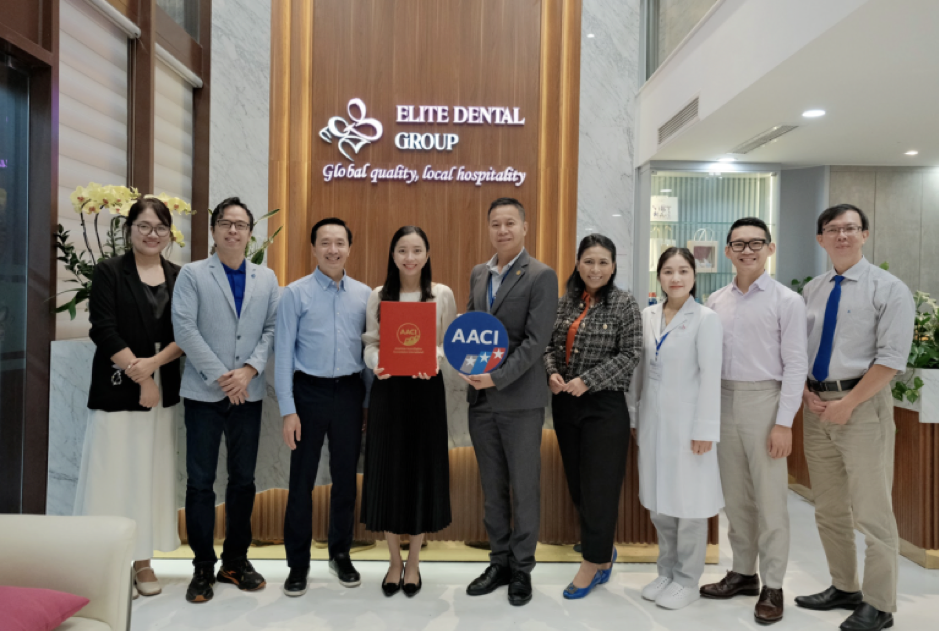
Elite Dental Vietnam is the first dental clinic in Vietnam to achieve AACI accreditation, with a score of 95.33/100 dental facilities
With an orientation toward evidence-based dentistry and the philosophy of “minimal intervention, maximum preservation,” Elite Dental combines scientific clinical practice with modern technology to support diagnosis and treatment. The team includes more than 30 specialist doctors trained internationally in France, Italy, the U.S. and Japan, and complex implant treatments are led by Assoc. Prof. Dr. Tran Hung Lam, DDS, PhD, Chief Medical Officer of Elite Dental. The treating dentist’s name and professional background are provided in writing before the patient travels.
On materials, Elite Dental is a recognized Straumann Center of Dental Education and uses documented, traceable implant brands, with manufacturer documentation available on request. Every treatment plan is itemized and agreed in writing before the patient departs.
Beyond clinical standards, Elite Dental emphasizes dedication and patient support, with a process coordinated throughout, from consultation and treatment planning to post-treatment follow-up. Implant patients receive the Implant Passport, a documented and portable warranty, along with a named contact for follow-up. For international patients, this support extends throughout the treatment journey, so that patients are fully informed and feel reassured before, during and after treatment.
To request a free treatment plan, call (+84) 28 7306 3838.
Conclusion
Most problems in dental tourism have warning signs that can be recognized in advance, and they have little to do with the country. They appear wherever a clinic can’t or won’t be specific. Putting questions in writing, comparing the answers side by side and giving vagueness the weight it deserves is sound advice, whichever clinic you choose.
Frequently Asked Questions
What is the biggest red flag when choosing a dental clinic abroad?
A claim of high standards with no named accrediting body, score or year behind it. This is common and easy to check.
Is dental treatment abroad safe?
It can be, and many patients are very satisfied. Safety depends on the individual clinic far more than on the country. Ask about accreditation, sterilization and the dentist who will treat you, and get all important information in writing.
Should I worry if a clinic pushes me to book quickly?
It is worth pausing. Time-limited discounts and large deposits requested before a written plan exists put pressure on a decision that deserves time.
How can I tell whether an implant brand is genuine?
Ask for the brand name and the manufacturer’s documentation. An implant card that you can show to your own dentist will be useful later.
What should I ask about aftercare before I book?
Who your named contact is, how the warranty works and whether it is written down, and how follow-up is handled once you are home.
Where can I find reviews the clinic hasn’t curated?
On Google, established dental tourism platforms and expat or traveler forums, ideally from patients in your own country.
References
- Tuoi Tre News. “Vietnamese dental group achieves AACI quality accreditation of US.” 8 October 2025.
- U.S. Centers for Disease Control and Prevention (CDC). Guidelines for Infection Control in Dental Health-Care Settings.
- World Health Organization (WHO). Patient safety materials.
Please note: This article is intended for general information only and is not a substitute for professional medical advice. Every patient’s oral health is different, so the most suitable treatment can only be determined after an in-person consultation and a personalized assessment by a qualified dentis