


Table of content
- 1. What Are Dental Veneers and How Are They Different from Composite Bonding?
- 2. Are Veneers Worth It for Your Case?
- 3. What Are the Real Advantages of Porcelain Veneers?
- 4. Veneer, Composite Bonding, or Crown: Which One Fits Which Case?
- 5. Who Is Not a Candidate for Veneers, and What Is Recommended Instead?
- 6. How Much Do Veneers Cost in Ho Chi Minh City in 2026?
- FAQ
- References
Key Takeaways
- Veneers are worth it when the problem is surface-level. Discoloration whitening cannot lift, small gaps, minor chips and slightly uneven shape respond well. This works really well for minor crowding or slightly rotated teeth. However, if the teeth are severely overlapped, we’ll need a different approach.
- Veneers and composite bonding are different treatments. A veneer is a porcelain shell made outside the mouth, then bonded on. Composite bonding is composite resin sculpted directly onto the tooth in one visit.
- Candidacy decides the outcome, not the material. A tooth that has had root canal treatment, or lost a large portion of structure, is generally restored with a crown instead.
- Survival data is strong for well-selected cases. A meta-analysis of non-feldspathic porcelain veneers reports survival of approximately 96% at five years and approximately 91% at ten years [1].
- Pricing is per tooth and set case by case. For current 2026 pricing on veneers and crowns, see the Elite Dental Vietnam cosmetic dentistry price list.
1. What Are Dental Veneers and How Are They Different from Composite Bonding?
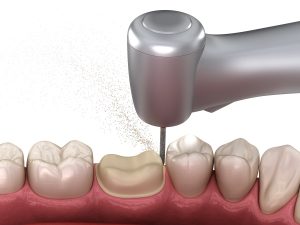
A dental veneer is a thin shell of porcelain, usually 0.3–0.5 mm thick on the facial surface and 1.0–1.5 mm at the incisal edge, if necessary. It is made outside the mouth in a dental laboratory, then bonded to the front surface of a prepared tooth. Composite bonding is different: the dentist applies tooth-colored resin directly onto the tooth and shapes it chairside, in one appointment.
That distinction matters more than most patients expect. Because a porcelain veneer is fabricated indirectly, its shade, translucency and surface texture are controlled under laboratory conditions rather than sculpted freehand. Porcelain also resists staining from coffee, tea and red wine better than composite resin does.
Composite bonding is faster, costs less, and is reversible in most situations. Porcelain veneers require a small amount of enamel to be removed first, which is why the UK National Health Service describes them as a permanent, non-reversible change to the tooth [5]. Neither approach is superior in the abstract, because each answers a different clinical question.
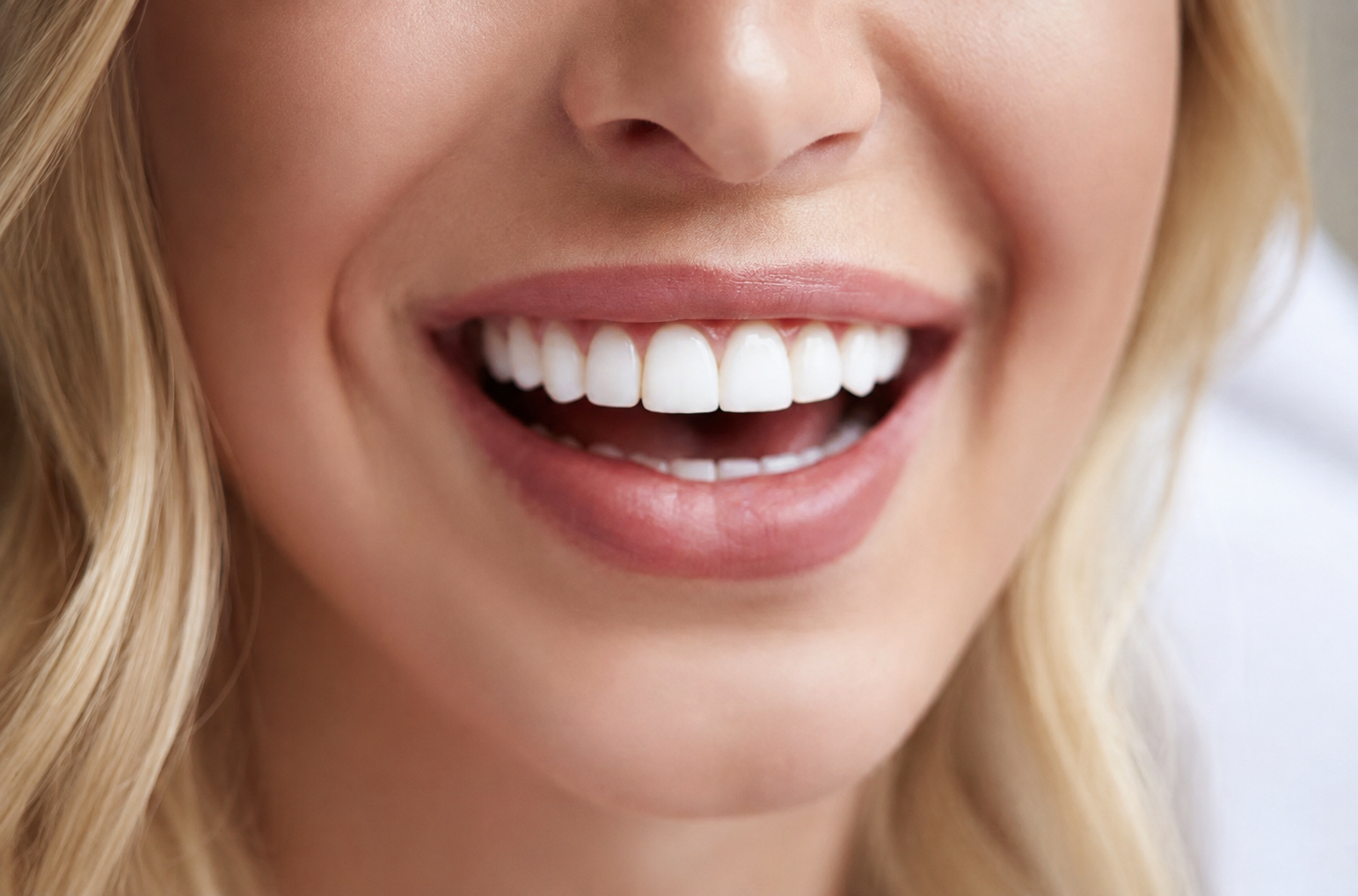
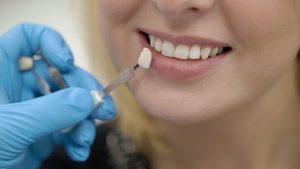
Porcelain veneers deliver a natural-looking smile and superior stain resistance, thanks to advanced lab fabrication
2. Are Veneers Worth It for Your Case?
Veneers are worth it when the concern is the outer surface of otherwise healthy front teeth, and when whitening or orthodontics cannot solve it. They are a poor value when the underlying tooth structure, bite or alignment is the actual problem. The honest answer therefore depends on diagnosis, not on the treatment’s reputation.
Patients who typically benefit have tetracycline or fluorosis staining that whitening cannot lift. Others have small diastema (gaps) between the front teeth, minor chips that have not reached the pulp, or teeth mildly uneven in shape. The American Dental Association lists the same short set of indications: discoloration, chips, gaps and irregular shape on teeth that are otherwise sound [6].
Patients who benefit less have significant crowding or rotation, a deep bite that loads the front teeth heavily, untreated decay or gum disease, or teeth that have lost substantial structure. In those cases, veneers would mask a problem rather than treat it.
3. What Are the Real Advantages of Porcelain Veneers?
Four advantages hold up under scrutiny: aesthetics, enamel preservation, comfort in function, and documented longevity.
Aesthetics. Glass-ceramic reflects and transmits light much as natural enamel does. At Elite Dental Vietnam, veneers are made from E.max glass-ceramic sourced from Europe, so shade and translucency are matched to the adjacent natural teeth rather than to a generic white.
Enamel preservation. A crown requires reduction on all surfaces. A veneer touches the labial surface and a small part of the incisal edge. In conservative cases, preparation stays within enamel, which is also the surface that bonds most predictably.
Comfort in function. Because the shell is thin and follows the original contour, most patients report no sense of bulk. Preparation this shallow generally stays clear of the pulp, so the procedure is well tolerated by most patients.
Longevity. A systematic review and meta-analysis of non-feldspathic porcelain veneers reports survival of approximately 96% at five years and approximately 91% at ten years [1], and separate feldspathic cohorts have been followed beyond twenty years [2]. Elite Dental Vietnam plans cases for a realistic service life of 8–10 years or longer, with routine review appointments and a 5-year warranty on veneer treatment.
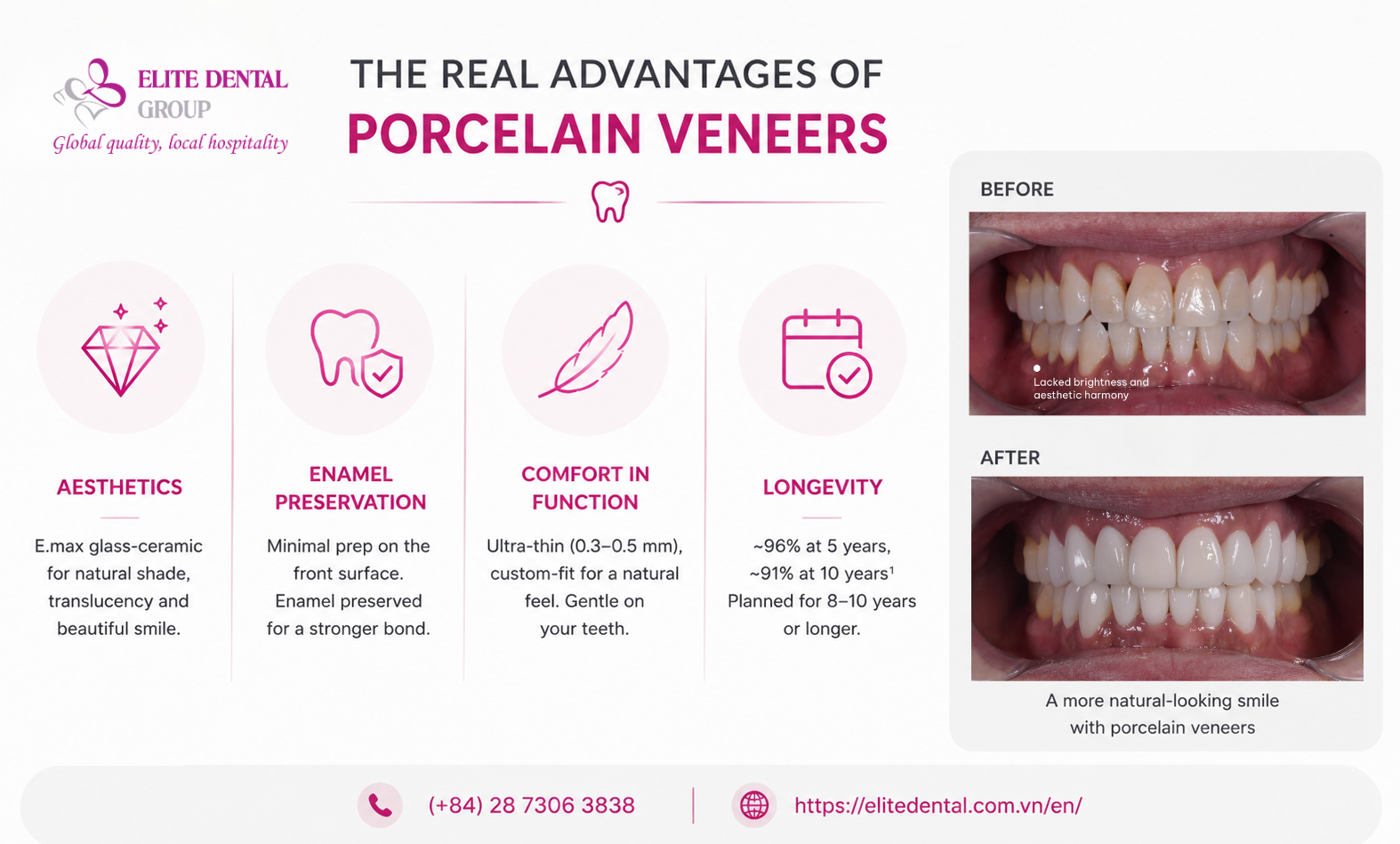
What withstands all scrutiny are four undeniable advantages: aesthetics, enamel preservation, functional comfort, and documented longevity
4. Veneer, Composite Bonding, or Crown: Which One Fits Which Case?
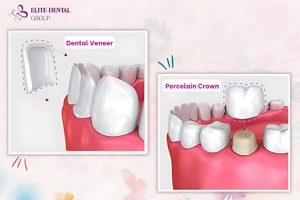
These three restorations answer three different questions. A veneer resurfaces a healthy front tooth that looks wrong. Composite bonding repairs one small defect in a single visit. A crown covers a tooth that has lost structure or strength. Match the restoration to the actual problem, not to the budget.
Use this table as a starting point for the conversation, not as a self-diagnosis.
| Porcelain Veneer | Composite Bonding | Porcelain Crown | |
| What it is | Porcelain shell made in a laboratory, then bonded on | Composite resin applied and sculpted directly on the tooth | Full cap covering the entire tooth |
| Tooth reduction | ~0.3–0.5 mm, front surface 1.0–1.5 mm at the incisal edge | Minimal to none | All surfaces, substantial |
| Well suited to | Stubborn staining, small gaps, minor chips, mild shape irregularity | Single small chip, temporary or trial correction, budget-limited cases | Root-canal-treated teeth, large fractures, heavily filled teeth, teeth needing structural coverage |
| Not suited to | Severe Crowding, rotation, heavy bite forces, teeth after root canal treatment | Large corrections, high-stain lifestyles, multi-tooth aesthetics | Cases where healthy structure would be sacrificed unnecessarily |
| Stain resistance | High | Moderate (resin picks up stain over time) | High |
| Typical visits | 2–4 | 1 | 2–4 |
| Reported survival in the literature | ~96% at five years, ~91% at ten years [1] | Not established in comparable systematic reviews; shorter than porcelain, and repair or replacement is typically needed sooner | ~95.7% (metal-ceramic) and ~90.7% (all-ceramic) at five years [3][4] |
| Service life planned at Elite Dental Vietnam | 8–10 years or longer, with routine review | Reviewed at each recall; refreshed when the surface dulls or stains | Reviewed at each recall, consistent with the five-year survival data above |
| Reversible | No | Largely yes | No |
5. Who Is Not a Candidate for Veneers, and What Is Recommended Instead?
Three groups are routinely redirected to a different plan at consultation, and each has a clear alternative.
Teeth that have had root canal treatment. These teeth are more brittle and usually need full coverage. A porcelain crown is the appropriate restoration, and it can be shade-matched to neighboring veneers in the same case.
Teeth that are rotated, crowded, or significantly out of arch. Veneers change color and shape, not position. Orthodontics (braces or clear aligners) treats alignment first. Veneers can refine shape afterward, if the patient still wants them.
Patients with active decay, gum inflammation, or unmanaged bruxism. Sequence matters. Disease is stabilized first, and grinding is managed with a night guard. A veneer bonded onto an unstable foundation is being asked to do a job it was not designed for.
Veneers are also technique-sensitive. Preparation depth, margin placement and bonding protocol each have narrow tolerances. This is the honest reason for the price: the outcome depends on planning and execution, not on the porcelain alone.
6. How Much Do Veneers Cost in Ho Chi Minh City in 2026?
Veneers are priced per tooth rather than per case, so your total depends on how many teeth actually show when you speak and smile. For current 2026 pricing on veneers and crowns, see the Elite Dental Vietnam cosmetic dentistry price list.
Most cases involve 6 to 10 upper front teeth, but the number is decided with the dentist, based on how far the smile line extends when you speak and laugh.
For international patients, veneer treatment in Vietnam is significantly less expensive than comparable care in the United States or Australia. The difference reflects local operating and laboratory costs, not the ceramic or the bonding protocol. The number of appointments and the schedule depend on the individual case and are confirmed at the initial consultation.
Planning uses digital Smile Design to preview tooth proportion and smile line before any preparation begins, and CAD/CAM fabrication for the ceramic. Shade and shape are personalized to the individual face rather than to a template. See the Dental Veneer service page or the Cosmetic Dentistry pricelist.
Quality standards at Elite Dental Vietnam
Elite Dental Vietnam holds AACI (American Accreditation Commission International) accreditation with a score of 95.33/100 — the first AACI-accredited dental system in Vietnam (issued September 2025). AACI evaluates sterilization, material traceability, and patient safety.

For cosmetic cases, each veneer file records the ceramic used, the shade selection, and the bonding protocol applied. Those records stay available to you and to any dentist who reviews your treatment later, wherever you live. AACI assesses the quality-management and safety system, not the clinical outcome of an individual case.
Contact Elite Dental Vietnam at (+84) 28 7306 3838 for a consultation on porcelain veneers.
Conclusion
Are veneers worth it? For the right case, meaning surface staining, small gaps, minor chips or mild shape irregularity on healthy teeth, the clinical evidence and the price both support the decision. For severe rotated teeth, root-canal-treated teeth, or an unstable bite, veneers are the wrong tool. A good consultation says so before any enamel is touched.
The value is in the diagnosis. If you are considering veneers in Ho Chi Minh City, book a consultation with Elite Dental Vietnam at (+84) 28 7306 3838. Ask specifically whether your case is a veneer case. A clear answer is worth more than a quotation.
FAQ
Can I get veneers if my teeth are stained from tetracycline?
Yes, in most cases. Intrinsic staining, which ranges from mild to moderate and deep, is one of the situations where veneers are most useful, precisely because whitening cannot lift it. Your dentist will assess the depth of the discoloration and may recommend a slightly more opaque ceramic to mask it while keeping a natural appearance. In cases of extreme discoloration, veneers may not achieve as good an outcome as full crowns.
Can I get veneers if I have a small gap between my front teeth?
Yes. Minor diastema is well suited to veneers, because closing a small space is a matter of adjusting tooth width and contour. For wider gaps, orthodontics is usually assessed first, so the final proportions stay natural rather than over-wide.
Can I eat and drink normally after veneers?
Yes. E.max glass-ceramic is bonded firmly to the enamel and restores normal chewing function for everyday eating. As with natural teeth, avoid biting ice, crab claws or bottle caps. If you grind your teeth at night, ask about a protective night guard.
Is the veneer procedure comfortable?
It is well tolerated by most patients. Preparation is shallow and generally stays clear of the pulp, and local anesthesia is used where appropriate. Any post-treatment sensitivity is typically mild and managed with standard measures.
Can veneers be matched to my existing crowns or natural teeth?
Yes. Replicating the exact appearance of a natural tooth or an existing older crown is exceptionally difficult. However, we will make every effort to match it as closely as possible to deliver an optimal aesthetic outcome that meets your expectations.
References
- Layton DM, Clarke M. A systematic review and meta-analysis of the survival of non-feldspathic porcelain veneers over 5 and 10 years. International Journal of Prosthodontics. 2013;26(2):111–124. PubMed PMID: 23476903.
- Beier US, Kapferer I, Burtscher D, Dumfahrt H. Clinical performance of porcelain laminate veneers for up to 20 years. International Journal of Prosthodontics. 2012;25(1):79–85. PubMed PMID: 22259802.
- Pjetursson BE, Sailer I, Zwahlen M, Hämmerle CHF. A systematic review of the survival and complication rates of all-ceramic and metal-ceramic reconstructions after an observation period of at least 3 years. Part I: Single crowns. Clinical Oral Implants Research. 2007;18(Suppl 3):73–85. PubMed PMID: 17594371.
- Sailer I, Makarov NA, Thoma DS, Zwahlen M, Pjetursson BE. All-ceramic or metal-ceramic tooth-supported fixed dental prostheses (FDPs)? A systematic review of the survival and complication rates. Part I: Single crowns (SCs). Dental Materials. 2015;31(6):603–623. PubMed PMID: 25842099.
- National Health Service (UK). Cosmetic Procedures: Veneers. https://www.nhs.uk/conditions/cosmetic-procedures/veneers/
- American Dental Association. MouthHealthy: Veneers. https://www.mouthhealthy.org/all-topics-a-z/veneers